Lost Treasure Joins the Map: Eight Sites People Are Still Digging
We've added a ninth category for buried caches, lost mines, and vanished hoards.
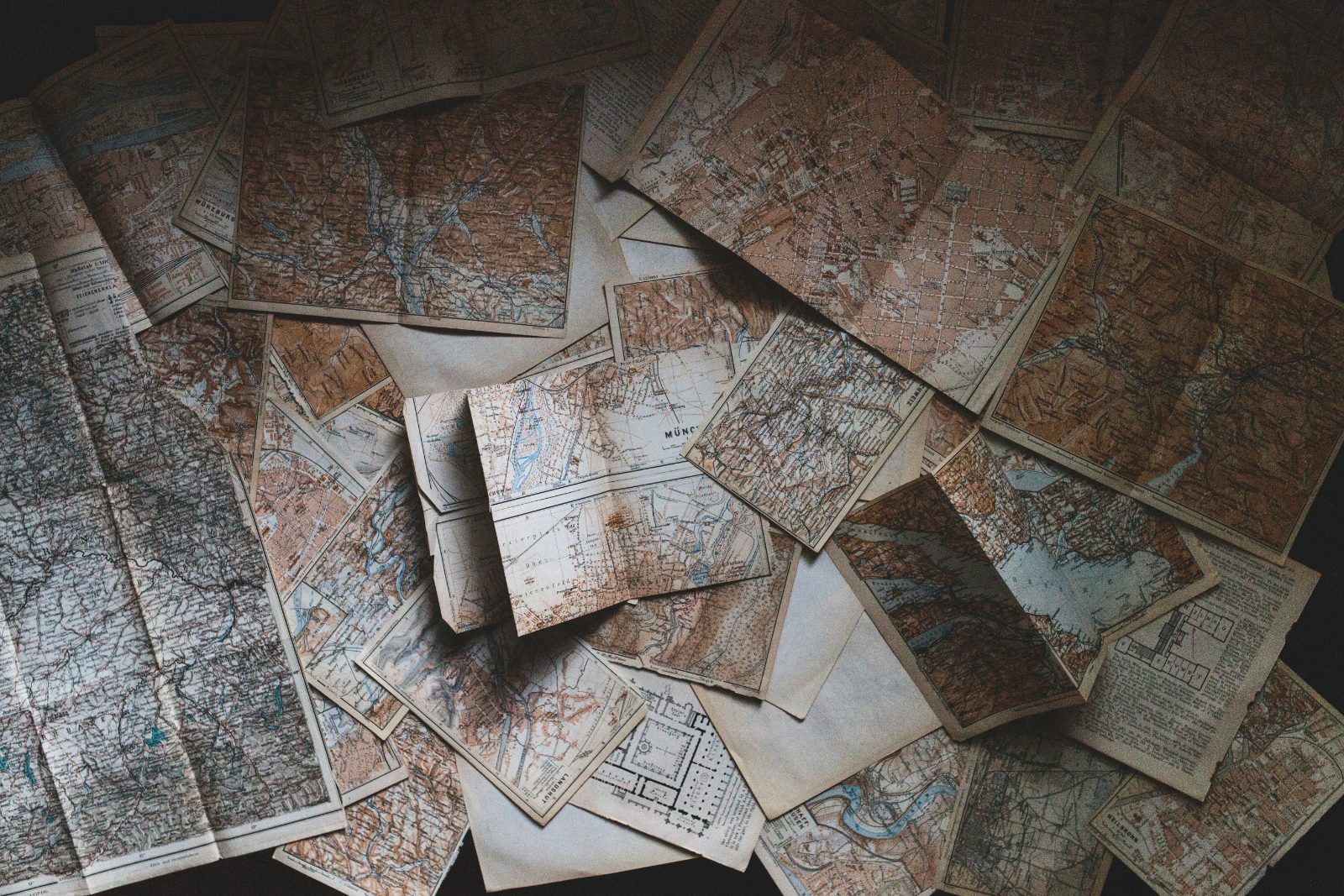
The Dutch National Archive released a map, drawn by hand and marked with red crosses, on January 3, 2023. The file that held it had been closed for the 75-year maximum. The map came from a German soldier, and it claims to mark where four boxes of loot from a 1944 bank explosion went into the ground outside the village of Ommeren, in Gelderland. Metal detectors arrived in the village within days. The sanctioned dig that followed found a pair of boots, a car wheel, scrap metal, and a wartime bullet.
The Ommeren Treasure is one of eight entries in Lost Treasure, a new category on Strange Route for buried caches, lost mines, and vanished hoards that people are still searching for.
What the category covers
Lost Treasure is the ninth category on the site, alongside cryptids, UFO sightings, hauntings, folklore, and the rest. It covers places where something valuable is claimed to be in the ground or under water and has never been produced: a buried cache, a lost mine, a sunk crate, a stolen hoard. The place is the entry, not the object, so every one of the eight has a search area a traveler can stand in.
A treasure story attracts more invention than most, so each entry carries a verdict on how much of it the record supports. There are four grades: strong historical basis, plausible but unverified, mostly legend, and probably fabricated. Of the eight now live, five are graded mostly legend and three are graded plausible but unverified. None is graded strong historical basis.
Each entry also carries a status: unfound, partially recovered, disputed, or likely hoax. Lake Toplitz is the only one currently marked partially recovered, and what came out of it was counterfeit money.
The eight sites
Lake Toplitz, Styria, Austria
Stern, the German magazine, sent divers into a mountain lake in the Totes Gebirge in the summer of 1959, and they brought up 15 crates. Fourteen held counterfeit British banknotes that had been printed at Sachsenhausen under Operation Bernhard, an SS program to wreck confidence in the pound. The forgeries were good enough that the Bank of England stopped issuing its larger denominations during the war and did not bring them back for two decades. In 1945, farmers saw uniformed men carrying crates to the shore, and whether anything else went into the water has never been settled. A second dive in 1963 ended with the drowning of a 19-year-old from Munich named Alfred Egner, which is what put the Austrian state into the lake.
Oak Island Treasure, Nova Scotia, Canada
Daniel McGinnis found a depression in the ground under an oak in 1795 and dug into it with two friends. Two centuries of excavation later, six people have died on the island and nothing recovered there has been shown to be part of a deliberate deposit. The most awkward object for a natural explanation is the coconut fiber found at Smith's Cove, which does not grow anywhere in Nova Scotia and has never been dated in a way that settles when it arrived. Geologists have an ordinary account of the famous flooding: the island sits on sinkhole-prone limestone, where solution channels behave like engineered tunnels.
The Beale Treasure, Virginia, United States
A 23-page pamphlet went on sale in Lynchburg in 1885 for 50 cents, with three sheets of numbered ciphers reproduced in full. Sheet two decodes cleanly against the United States Declaration of Independence and lists the contents, 2,921 pounds of gold and 5,100 pounds of silver, without giving the spot. Sheet one, the one that supposedly gives the location, has held for 140 years. In 1980, the cryptographer Jim Gillogly ran sheet one against the same key and got long alphabetical runs like "abfdefghiijklmmnohpp." One reading calls that the fingerprint of a hoax. Another calls it a second key nobody has found.
The Lost Dutchman's Gold Mine, Arizona, United States
Jacob Waltz died in Phoenix on October 25, 1891. The neighbors who nursed him said that in his last days he described a rich gold mine hidden among the Superstition Mountains, east of Phoenix. In the 130 years since, no mine matching that account has turned up. The Coolidge Examiner reported in 1932 that Adolph Ruth was the ninth person the search had claimed.
The Loch Arkaig Treasure, Highland, Scotland
On April 30, 1746, Spanish gold worth 1,200,000 livres came ashore in Arisaig, at Loch nan Uamh, carried by two French ships, two weeks after Culloden destroyed the Jacobite army. Six of the caskets made it to Loch Arkaig, where they were hidden. The men who knew where it lay went into hiding, prison, or exile, and the gold remains unaccounted for. This is the entry with the best contemporary paperwork behind it, and the record also contains a modern forgery.
The Ommeren Treasure, Gelderland, Netherlands
The Dutch state believed the soldier enough to act on his account. Its Central Asset Tracing Service searched the site four times in 1947, according to the Archive's file, and in June it brought him from Germany to point out the spot. The next day he told investigators he did not believe the boxes were still there. A July memo in the same file weighs three possibilities for the empty holes: an invented story, boxes already dug up by someone who knew the spot, or misuse of the tip by the service's own staff.
Château de Gisors, Normandy, France
Roger Lhomoy, the castle's gardener, dug under the Gisors mound at night for years. In March 1946, he went to the town hall and described what he said he had found: an underground stone chapel with sarcophagi along its walls and a nave holding 30 metal chests in columns of 10. His tunnel was filled in. Official excavators sent by France's culture minister in the 1960s found nothing at all.
Ali Pasha's Treasure, Epirus, Greece
Ali Pasha ruled Epirus from Ioannina for four decades. He took refuge from the Sultan's troops in a monastery on Lake Pamvotida's island and was killed there in January 1822. People have searched for the fortune he was said to have hidden before his fall ever since. An Italian company dug the area for five years from 1913 and found nothing. The rooms where he sheltered and was killed now hold the Museum Ali Pasha and Revolutionary Period, about 10 to 15 minutes across the water from the Ioannina city pier.
What a treasure entry gives you
Lost Treasure entries do not use the standard place page. They have their own layout, built around the two questions people arrive with: where would you look, and is it worth looking.
- A search zone on satellite imagery. Six of the eight carry a shaded search area, drawn by hand and reviewed before publishing, anchored to a fixed address. The anchor is an address rather than a set of coordinates, because an address is what a car can be pointed at.
- The evidence, split in two. Every entry separates the documented record from legend and hearsay and shows them side by side, so the weight the story is carrying is visible at a glance. For the Beale Treasure the documented column holds the 1885 pamphlet and a cipher anyone can check. The other column holds Thomas J. Beale himself, for whom no record outside the pamphlet has ever been matched.
- Known clues. The specific pieces people argue over: the second cipher, the oxygen-free layer at Toplitzsee, the coconut fiber at Smith's Cove, the red crosses on the Ommeren map.
- Access and permission. Whether the land is private, whether metal detecting is appropriate, and who would need to be asked. Most of these places are working farms, nature reserves, or private property, and Bedford County has been fielding uninvited treasure hunters for generations.
- A reality check. A closing verdict on what is settled and what is not. Oak Island's says the hole is real, the digging is real, six people have died in it, and nothing has ever been shown to have been put there on purpose.
Using the category
The full set lives at Lost Treasure. Every entry is pinned on the Mystery Map and listed in the Archive, so filtering the map to this category puts seven countries' worth of search areas in one view. That is a practical way to find out whether a trip already on your calendar passes within reach of one.
Several of the eight sit on land that welcomes visitors, with no digging involved. The Peaks of Otter Winery and Johnson's Orchard are working farms in Bedford County that take visitors through the week. The Toplitzsee is a walk of about 30 minutes from the parking area at Gößl, and the fishing hut at the boat landing has a small museum of finds from the lake. The Superstition Mountain Lost Dutchman Museum, on Apache Trail, has the Peralta Stone Maps on display. Oak Island is guided tours only, on weekends between May and October, and dates sell out.
If you get to one, the "I've Been Here" button puts your photos into the gallery on that entry. Access notes go stale faster than anything else on these pages, since land changes hands and seasonal hours move, so commenting will be the fastest way we hear about it.
Featured Places
Lake Toplitz
Styria · AustriaIn the summer of 1959 divers working for the German magazine Stern pulled 15 crates out of a mountain lake in Styria. Fourteen of them held counterfeit British banknotes, printed by the SS under Operation Bernhard to wreck confidence in the pound. Farmers had watched uniformed men carry crates down to the shore in 1945, and the question of what else went into the water has never closed.
Oak Island Treasure
Nova Scotia · CanadaA small Nova Scotia island where a buried, booby-trapped shaft discovered in 1795 has driven more than two centuries of treasure-hunting, six known deaths, and theories ranging from pirate gold to Templar relics, without ever producing a confirmed treasure.
The Beale Treasure
Virginia · United StatesIn 1885, an anonymous pamphlet printed in Lynchburg claimed that a man named Thomas J. Beale had buried gold, silver, and jewels in Bedford County around 1820, and left the directions in three numbered ciphers. Only one cipher has been read, using the Declaration of Independence as its key, and it lists the contents but not the spot. The other two have held for 140 years, and the diggings around Montvale have turned up nothing.
The Lost Dutchman's Gold Mine
Arizona · United StatesJacob Waltz died in Phoenix on October 25, 1891, and Julia Thomas, the neighbor who nursed him through his last illness, said he had spent his final days describing a rich gold mine hidden in the Superstition Mountains east of the city. No mine matching that account has been found in the 130 years since. By 1932, a Coolidge Examiner report counted Adolph Ruth as the ninth person lost to the search.
The Loch Arkaig Treasure
Scotland · United KingdomOn April 30, 1746, two French ships landed gold sent by Spain, about £35,000 in French louis d'or, at Loch nan Uamh in Arisaig, two weeks after the Jacobite army had been destroyed at Culloden. Six caskets of it reached Loch Arkaig and were hidden. The men who knew where went into hiding, into prison, or into exile, and not all of the gold was ever accounted for.
The Ommeren Treasure
Gelderland · NetherlandsA German soldier said four boxes of valuables from a bank in Arnhem were buried outside the village of Ommeren. Dutch investigators searched the site four times in 1947 and found nothing. After the Dutch National Archive published the hand-drawn map he handed over, people with metal detectors went into the fields and did no better.
Château de Gisors
Normandy · FranceIn March 1946, the castle's gardener walked into the town hall at Gisors and reported what he said he had found after years of digging under the castle mound at night: a stone chapel underground, sarcophagi along its walls, and 30 metal chests stacked in the nave in columns of 10. His tunnel was filled in. France's culture minister sent official excavators in the 1960s and they found nothing at all.
Ali Pasha's Treasure
Epirus · GreeceAli Pasha ruled Epirus from Ioannina from 1788 and was killed on February 5, 1822, in a monastery on the island in Lake Pamvotida, where he had taken refuge from the Sultan's troops. The fortune he was said to have hidden before his fall has been searched for ever since. Searchers have dug for it around Ioannina and as far away as Thessaly, and found nothing.
Comments
0 on the record
- No comments yet. Be the first witness.