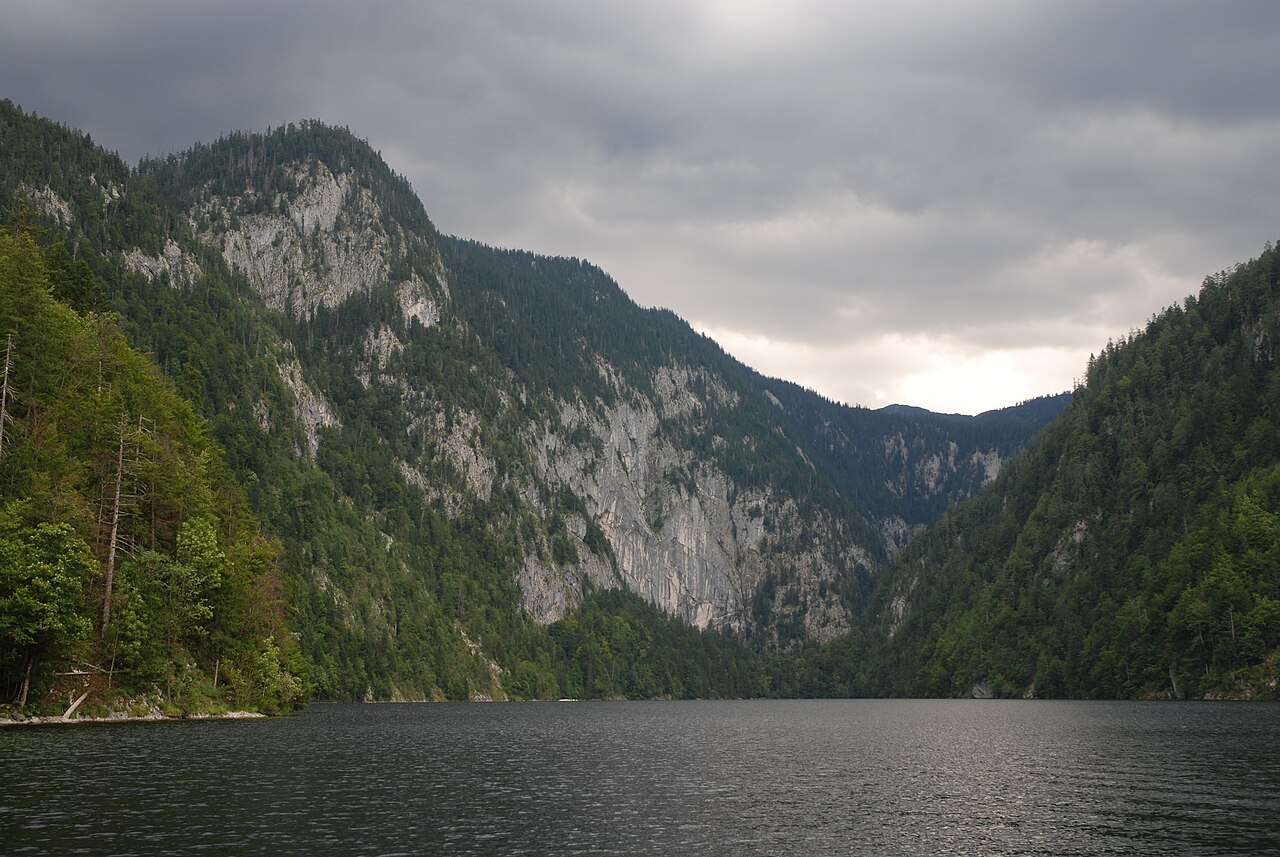
Lake Toplitz
In the summer of 1959 divers working for the German magazine Stern pulled 15 crates out of a mountain lake in Styria. Fourteen of them held counterfeit British banknotes, printed by the SS under Operation Bernhard to wreck confidence in the pound. Farmers had watched uniformed men carry crates down to the shore in 1945, and the question of what else went into the water has never closed.
Search Area
loading map…
- Start point
- Fischerhütte, at the lake shore
- Visitor access
- Fischerhütte am Toplitzsee, Gößl, 8993 Grundlsee
- Measured from
- Gößl, at the eastern end of the Grundlsee
- On foot
- About 30 minutes from the Gößl parking area on a marked track
- By boat
- Scheduled boat trips run on the Grundlsee and the Toplitzsee in season
- Nearest town
- Grundlsee, Styria
A general search zone, not an exact site. The lake itself is the search area, and the Fischerhütte at its western end is the fixed point to walk to.
The Legend
Lake Toplitz lies in the Salzkammergut in Styria, walled in by the cliffs of the Totes Gebirge. The lower layer of the lake holds no oxygen and almost nothing lives in it, so wood sunk there does not rot. Whatever went into the water in 1945 is still on the bottom in close to the condition it went in.
In the closing weeks of the war, farmers around the lake watched uniformed men bring heavy wooden crates down to the shore. What was in them has been the question ever since.
Part of it was answered in 1959, when divers working for the German magazine Stern brought up 15 crates. Fourteen held counterfeit British banknotes. The forgeries came from Operation Bernhard, an SS counterfeiting program run with prisoner labor at Sachsenhausen, which printed sterling in quantities meant to break confidence in the pound.
The lake kept its reputation anyway. In October 1963, a 19 year old diver from Munich named Alfred Egner drowned in it. He had been hired by two men, one of them a former SS officer, and they did not report his death for about 20 hours. Austrian authorities opened an inquiry, went into the lake themselves, and brought up more counterfeit notes, some weapons, and Egner's body.
Diving has been restricted since. The forged money is documented. The gold is not.
What May Be Out There
The lake has produced counterfeit currency, the plates used to print it, and official paperwork. What else is claimed for it has never surfaced.
- More crates from Operation Bernhard, of which several have already been recovered.
- Records from the Reich Main Security Office, of which some were recovered.
- Gold, jewelry, and looted valuables, claimed repeatedly and never produced.
- Recovered so far: counterfeit sterling, printing plates, and a press, weapons, and documents.
The Evidence
Documented record
- The 1959 Stern expedition, which raised 15 crates, 14 of them full of forged British notes.
- The Austrian Interior Ministry operation of 1963, which followed Alfred Egner's death and recovered more crates.
- Operation Bernhard itself, documented in German and Allied records and in the Bank of England's own collection.
- Alfred Egner's drowning in October 1963 and the official inquiry it triggered.
Legend and hearsay
- The gold bullion said to have gone into the water with the crates.
- The claim that Nazi account books and address lists are still on the bottom.
- The local story that the lake is bottomless or drains into the lakes around it.
Known Clues
The oxygen free layer. Below its upper layer the lake holds no oxygen and almost no life. That is why crates sunk in 1945 came up in 1959 with their contents still legible, and why anything still down there is likely to be intact.
Operation Bernhard. The forgery program is not in dispute. It ran at Sachsenhausen using prisoner labor, and the notes were good enough that the Bank of England stopped issuing its larger denominations during the war and did not bring them back for two decades.
Alfred Egner's death. Egner was 19, from Munich, and was hired in 1963 by two men including a former SS officer. He drowned. The delay in reporting it, about 20 hours, is what turned a private treasure hunt into a police matter and put the Austrian state into the lake.
Visiting Information
The lake is reached on foot from the parking area at Gößl, at the eastern end of the Grundlsee. Two marked paths lead there, one through the village below the Gößler Wand and one through the woods past the Ranftlmühle, and the walk takes about 30 minutes either way. Scheduled boat trips run on the Grundlsee and the Toplitzsee through the warmer months.
The Fischerhütte sits at the western end of the lake beside the boat landing. It serves fish from the water it stands on and keeps a small museum of objects recovered from the lake during the diving expeditions.
The lake is inside the Totes Gebirge nature reserve. Swimming is allowed. Diving, boats, and paddleboards are not. These are mountain paths and the weather in the Salzkammergut turns quickly, so it is worth checking conditions before setting out and starting back in good light.
Reality Check
This is the rare case where part of the treasure has been recovered and can be accounted for. Crates came out of the lake in 1959 and again in 1963, the second time under a government operation, and what they held was forged British money, printing plates, and paperwork. That much is settled. The gold is a separate claim, made repeatedly since 1945 and never once produced. The lake has given up its forgeries and kept its reputation.
Field Gallery
No approved field photos yet. You could be first.
Community Notes
No community notes yet.

Krampus
42 miThe earliest solid written record of the masked winter-figure tradition Krampus belongs to is a 1582 account from Dießen, Bavaria, of people paid to "hunt the Percht." The horned figure with birch branches accompanies St. Nicholas every December 5 and 6 around Salzburg, Carinthia, and Styria.

Poveglia Island
174 miMunicipal records say the buildings reopened in 1922 as a casa di riposo, a home for the elderly. A sign reading psychiatric ward is still legible on the entrance wall. For the doctor, the hammer lobotomies, and the fall from the bell tower that made the island famous, nobody has produced a document.
Houska Castle
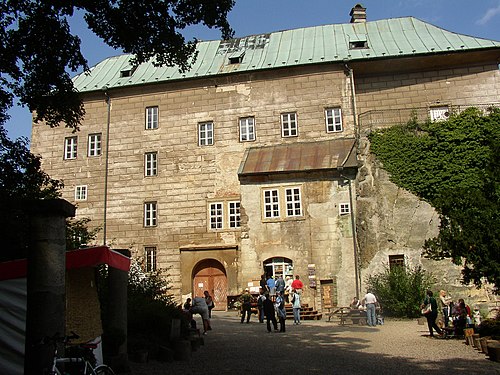
198 miThe castle went up in the 13th century on a sandstone spur with no water source, no road worth taxing, and no settlement to defend. What it was built for has never been settled. The gateway to hell arrived about 700 years later.

Project Riese
238 miBetween 1943 and 1945 the Third Reich drove seven separate complexes of tunnels into the Owl Mountains using prisoner labor, finished none of them, and destroyed the paperwork before the surrender. What the tunnels were for has never been established from a document. Three of the complexes are open to visitors, and the rock still carries the marks of the work.