The Lost Dutchman's Gold Mine
Jacob Waltz died in Phoenix on October 25, 1891, and Julia Thomas, the neighbor who nursed him through his last illness, said he had spent his final days describing a rich gold mine hidden in the Superstition Mountains east of the city. No mine matching that account has been found in the 130 years since. By 1932, a Coolidge Examiner report counted Adolph Ruth as the ninth person lost to the search.
Search Area
loading map…
- Start point
- Superstition Mountain Lost Dutchman Museum
- Visitor access
- 4087 E Apache Trail, Apache Junction, AZ 85119
- Measured from
- Weaver's Needle, the one landmark every account names
- On foot
- Peralta Trailhead is the usual way in, off a graded dirt road from US 60
- Parking
- Dirt lot at the trailhead, which fills early in the cool season
- Nearest town
- Apache Junction, Arizona
A general search zone, not an exact site. Weaver's Needle and the Peralta Trailhead are the fixed points the accounts are measured from.
The Legend
Jacob Waltz reached Arizona Territory in the 1860s and filed mining claims across the region. He was German, not Dutch. "Dutchman" is a period corruption of "Deutsch."
Waltz died in Phoenix on October 25, 1891. Julia Thomas, the neighbor who cared for him at the end, said he had described a gold deposit hidden in the Superstition Mountains, along with a box of high grade ore he kept under his bed. Those directions were written down after Waltz was dead, from memory, by people who stood to gain from them.
Julia Thomas went looking for it and found nothing. Most of the stories place the mine in the vicinity of Weaver's Needle, a volcanic spire near the middle of the range. Everything past that point is contested. Waltz left no map, and no claim he filed has been matched to the ground.
The Superstition Wilderness covers about 160,000 acres of canyon and broken rock east of Phoenix. People have been walking into it with his directions for more than 130 years. Some of them have not walked out.
What May Be Out There
The contents were described by people repeating what a dying man had told them. Nothing has been assayed on the record.
- A worked gold vein or cache, its richness described only secondhand.
- The box of high grade ore Waltz kept under his bed, sold after his death and never traced.
- Older Spanish and Mexican workings that some searchers believe Waltz reworked.
- Recovered so far: nothing that has been shown to be Waltz's.
The Evidence
Documented record
- Waltz's death in Phoenix on October 25, 1891.
- His mining claims, on file in Arizona Territory land records.
- Newspaper coverage of Adolph Ruth's disappearance in June 1931 and the recovery of his remains.
- The Peralta Stone Maps, carved tablets held at the Superstition Mountain Lost Dutchman Museum.
Legend and hearsay
- The deathbed directions, written down only after Waltz had died.
- The claim that the vein is rich beyond counting.
- Reported markers, carved hearts, and a hidden trapdoor.
- The link to the Peralta family's Spanish era workings.
Known Clues
Weaver's Needle. The directions as recorded place the mine within sight of the spire. Some readings claim its shadow points to the entrance at a set hour, a detail no two accounts agree on.
The Peralta Stone Maps. Carved stones that surfaced near Florence Junction in 1949, read by some as a route to a Spanish mine. Their age and authenticity have never been settled. They are on display at the museum in Apache Junction, which is the closest a visitor gets to a physical clue.
Adolph Ruth's remains. Ruth was a veterinarian from Washington who went in with a map in June 1931 and did not come out. Searchers found his skull on December 10, 1931, and the rest of his remains that January, on Black Top Mesa. The skull had a hole in it. The Coolidge Examiner counted Ruth as the ninth person lost to the search.
Visiting Information
The Superstition Mountain Lost Dutchman Museum sits on Apache Trail just east of Apache Junction, on a 15 acre site with an exhibit hall, a 20 stamp gold mill, and the Apacheland barn. It is open 9am to 4pm daily and closes through August, reopening on September 1. Hours are worth confirming before a trip.
Lost Dutchman State Park is a few minutes further along the same road, with campsites, picnic areas, and trailheads at the foot of the range. The Peralta Trailhead, the usual way toward Weaver's Needle, is reached by a graded dirt road off US 60 on the south side of the mountains.
The wilderness is hot and dry from late spring through September and the trails carry no reliable water. It is best to go in the cool season, start early, carry more water than seems necessary, and turn back with daylight to spare.
Reality Check
Jacob Waltz lived, mined, and died in Arizona Territory, and the record of his life is real. What survives of his directions is not. They were written down after he died by people who had heard them secondhand, and the range they point into has killed more searchers than it has rewarded. Adolph Ruth's death is documented. The mine is not.
Field Gallery
No approved field photos yet. You could be first.
Community Notes
No community notes yet.
Phoenix Lights
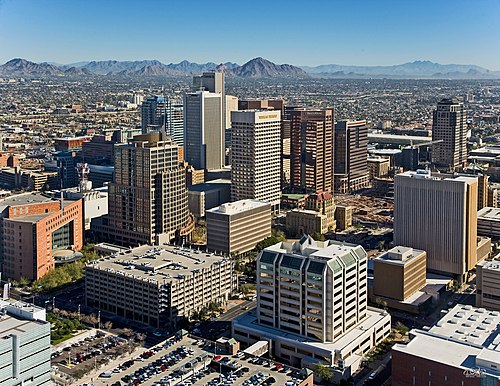
41 miShortly after 8pm on March 13, 1997, witnesses across nearly 300 miles of Nevada and Arizona watched a silent V-shaped formation of lights, and later that night a separate set of lights hung over Phoenix for hours. The Air Force attributes the second set to flares dropped during a National Guard exercise at the Barry Goldwater Range.

El Tiradito
87 miIn 1927, the Tucson City Council accepted one story as the official origin of this shrine: a young shepherd named Juan Oliveras, killed with an axe by his father-in-law and buried where he fell. A University of Arizona folklorist has recorded more than 20 versions of the story. People have lit candles for a man said to be buried in unconsecrated ground since the 1870s, and on this lot since 1927. In 1971, residents fighting an expressway through their barrio got the lot listed on the National Register of Historic Places.

The Thing?
119 miA desert attraction advertised by billboards for hundreds of miles, built around a mummified figure brought to Arizona in 1965. In 2018, its owners spent $3.5 million rebuilding it around a story about aliens directing human history.

Salvation Mountain
237 miA 50-foot folk-art mountain of adobe, hay, and donated paint that one Korean War veteran built alone in the California desert over nearly three decades, turning a message of religious devotion into an unlikely Congressional-recognized "national treasure."