
The Greenbrier Ghost
On February 22, 1897, doctors exhumed Zona Heaster Shue and found her neck dislocated between the first and second vertebrae and her windpipe crushed. Her husband, a blacksmith known as Trout Shue, was convicted of her murder in this courthouse that summer and sent to prison for life. The ghost entered the trial only when his own lawyers cross-examined her mother, Mary Jane Heaster, who testified that Zona had come to her on four nights and told her how she died.
Field Guide Entry
On the morning Zona Shue died, her husband sent a boy to the house to look for eggs and to ask whether she wanted anything from the store. The boy found her lying on the floor. By the time Dr. Knapp arrived, the body had been laid out and dressed. Edward S. Shue, a blacksmith the local papers called "Trout," had helped dress the body, with a high stiff collar and a large veil folded several times and tied in a bow under the chin. Knapp saw discoloration on the right side of her neck and her right cheek, and he stopped his examination after Shue asked him to go no further, according to the trial evidence. Witnesses said later that her head was very loose on the neck.
The contemporaneous record does not agree on when she died. The trial evidence, as the Monroe Watchman reported it, put her death on January 22, 1897. The Greenbrier Independent's death notice that week said Sunday, January 24, and the same paper gave January 23 a month later.
The exhumation
"Rumors in the community" led the authorities to suspect that she had not died of natural causes, the Greenbrier Independent reported. On Monday, February 22, 1897, before Justice Homer McClung and an inquest jury, with State's Attorney John A. Preston assisting, her body was exhumed and examined by Drs. Knapp, Rupert, and Houston McClung. Shue was there as a witness. The doctors found her neck dislocated between the first and second vertebrae, the ligaments torn, and the windpipe crushed at the front of the neck. The inquest jury charged Shue with murder, and on February 24, he was lodged in the jail at Lewisburg.
The trial
The trial opened in Greenbrier Circuit Court on June 23, 1897, before Judge J. M. McWhorter. Preston and Henry Gilmer prosecuted. Shue was defended by Dr. Rucker and James P. D. Gardner, a Black attorney. "There was no witness to the crime," the Greenbrier Independent wrote, and the state rested its case "wholly on the circumstances": the collar and veil, his request that the doctor stop, his good spirits after her death, and his repeated remark that nobody could prove he had killed her. Shue testified for a whole afternoon, denied nearly everything, and admitted that he had served a term in the penitentiary.
Mary Jane Heaster's account of her daughter's visits came out when Shue's lawyers cross-examined her. She said Zona came to her four times, on four nights, and that on the second night Zona said "her neck was squeezed off at the first joint." Pressed to call the visits dreams, Heaster refused: "I am not going to say that; for I am not going to lie." She testified that she had told her neighbors about the visits before the inquest.
The jury was out 1 hour and 10 minutes and found Shue guilty of first-degree murder, with a recommendation of imprisonment, which meant life in the penitentiary. The Greenbrier Independent's report puts the verdict on Thursday, July 1, 1897. The state encyclopedia gives July 8, and other accounts give July 11.
On Sunday, July 11, a mob of 10 to 20 men carrying "a stout new rope" gathered at a campground 8 miles west of Lewisburg to take Shue from the jail and hang him, because some residents wanted the death penalty. Sheriff Nickell talked them into going home, and a deputy had already moved Shue to the woods outside town. Shue was taken to the penitentiary on July 13. He died at Moundsville on March 13, 1900.
The Australian ghost
The issue of the Greenbrier Independent that announced Zona Shue's death, on January 28, 1897, also carried an item headed "A Ghost Story." It told of an Australian murder case in which a witness, threatened with death if he told what he saw, later confessed that he had "invented the ghost" to lead people to the body. Katie Letcher Lyle, in her book The Man Who Wanted Seven Wives, argued that Heaster probably read both and made up the visits to force the authorities to reopen the case.
On stage
Madison Opera gave the world premiere of Everlasting Faint, by Scott Gendel and Sandra Flores-Strand, on February 13 and 15, 2026, with Mary Heaster as the lead role. The title is the phrase later retellings attribute to Knapp's first finding. In July 2026, Greenbrier Valley Theatre in Lewisburg staged The Greenbrier Ghost, a musical by Cathey Sawyer and Joe Buttram.
The marker and the grave
The state highway marker on US 60 at Sam Black Church, west of Lewisburg, says the autopsy "verified the apparition's account" and calls the case the "only known case in which testimony from ghost helped convict a murderer." Zona is buried about 5 miles from the marker, in Soule Chapel Methodist Cemetery, under a stone that reads "In memory of Zona Heaster Shue, Greenbrier Ghost, 1876-1897."
Visiting Information
The courthouse is a working county building, home to the circuit, family, and magistrate courts. Construction began in 1837 and finished in 1840, and the wings were added in 1937 and 1963. It stands in the Lewisburg Historic District, a short walk from the Greenbrier Valley Visitor Center.
West Virginia Tourism has listed candlelight ghost tours of the historic district every weekend from September through November, booked by phone at 304-256-8687.
The state marker is on US 60, 0.1 miles south of Interstate 64 exit 156 at Sam Black Church.
Field Gallery
No approved field photos yet. You could be first.
Community Notes
No community notes yet.
Nearby Strange Places

The Greenbrier Bunker
8 miCongress built itself a fallout shelter under a luxury resort between 1958 and 1961, hidden behind the construction of a new hotel wing, with dormitories for 1,100 people and chambers for the House and the Senate. Staff maintained it under cover of a television repair company for 30 years. It stayed secret until Ted Gup published it in The Washington Post on May 31, 1992.

Lake Shawnee Amusement Park
47 miAn amusement park that opened in 1926 on Mercer County land where a settler family had been attacked in 1783, closed after a girl was killed on the swing ride, and was later found to be sitting on a Native American burial ground. The swing frame and the ferris wheel are still standing in the grass, and the family that owns the land runs tours by appointment.

The Beale Treasure
49 miIn 1885, an anonymous pamphlet printed in Lynchburg claimed that a man named Thomas J. Beale had buried gold, silver, and jewels in Bedford County around 1820, and left the directions in three numbered ciphers. Only one cipher has been read, using the Declaration of Independence as its key, and it lists the contents but not the spot. The other two have held for 140 years, and the diggings around Montvale have turned up nothing.
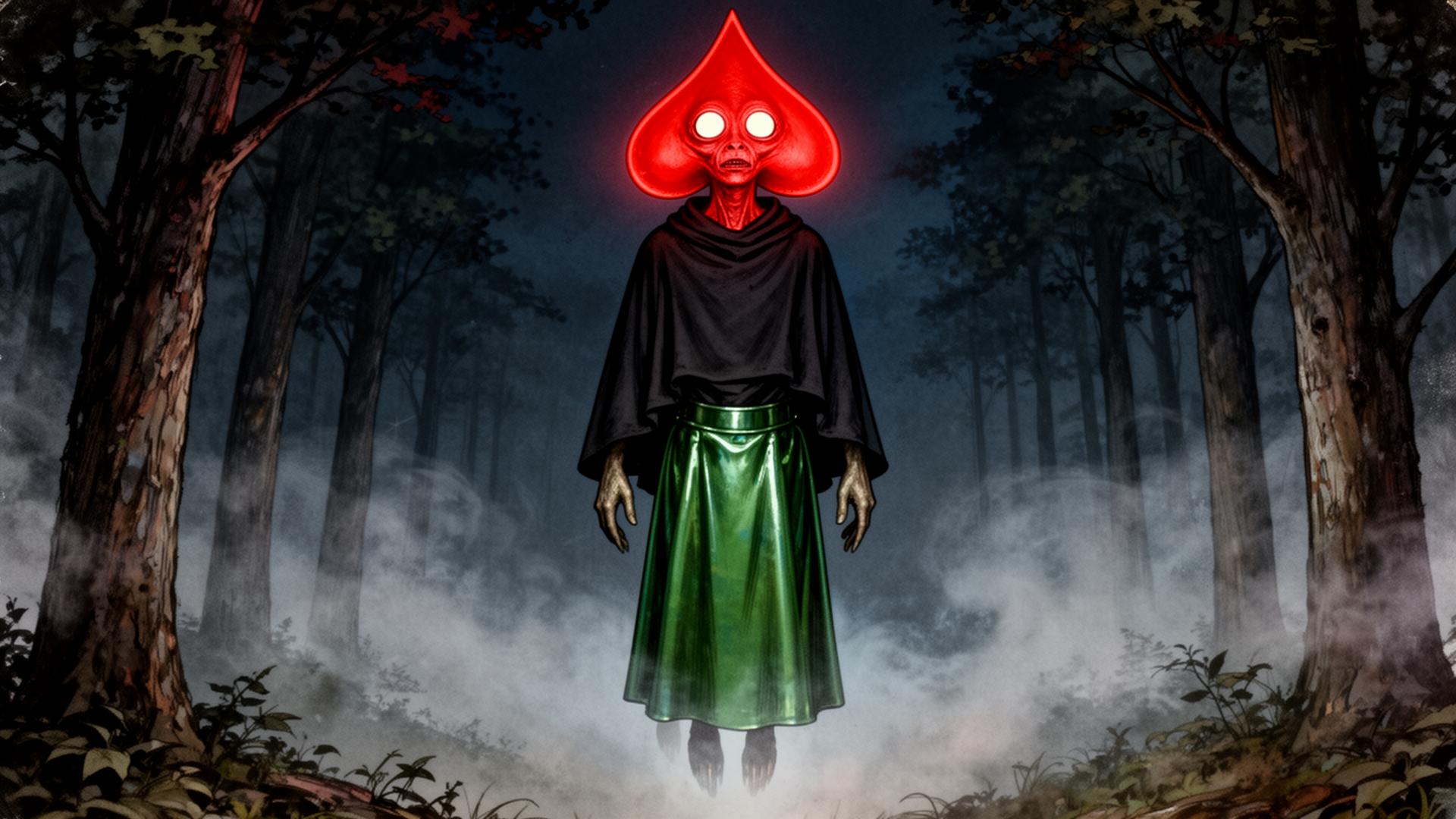
The Flatwoods Monster
63 miOn the evening of September 12, 1952, a group of boys, a mother named Kathleen May, and a 17-year-old National Guardsman walked up a hill outside Flatwoods to look at something that had come down. Braxton County has since built a free museum and a set of giant monster chairs on what they said they saw.