

The Greenbrier Bunker
Congress built itself a fallout shelter under a luxury resort between 1958 and 1961, hidden behind the construction of a new hotel wing, with dormitories for 1,100 people and chambers for the House and the Senate. Staff maintained it under cover of a television repair company for 30 years. It stayed secret until Ted Gup published it in The Washington Post on May 31, 1992.
Field Guide Entry
The cover
The Greenbrier at White Sulphur Springs was already the kind of resort presidents visited. In 1958 the government paid for a new West Virginia Wing, and the excavation for the wing covered the excavation for what was underneath it: a bunker of reinforced concrete with blast doors weighing tens of tons, set into the hillside behind the hotel.
Inside were dormitories with bunks assigned by name, a clinic, a power plant, a decontamination area, an incinerator, and two halls sized and fitted for the House and Senate to sit in. The bunker was completed in 1961 and kept at operational readiness, with food rotated and equipment serviced, for the next three decades.
The maintenance crew
The people who kept it running worked for Forsythe Associates, a company that serviced televisions at the resort. They did service televisions. They also maintained the bunker, held security clearances, and were on call, and the arrangement held for 30 years.
Hotel staff and locals noticed things over the years, the way people do. Nobody put it in print.
May 31, 1992
Ted Gup, an investigative reporter at The Washington Post, worked from a tip, went to the resort, and published. The article described the facility, its purpose, and its location. Its secrecy gone, the bunker was decommissioned as a government facility.
What it is now
The resort runs it as a tour. The blast doors, the bunks, the chambers, and the decontamination showers are all still there, and the conference rooms in part of the space have been sold to a data storage business. The one plan the United States had for keeping its legislature alive after a nuclear exchange is now something you buy a ticket for.
Visiting Information
Tours run about 90 minutes and cost around 52 dollars for adults and 24 dollars for ages 10 to 17, with 10 the minimum age, and you do not need to be staying at the resort. Booking ahead by phone is the norm, and the bunker closes for short periods each year.
Phones, bags, and cameras are not allowed inside and go into lockers before you go down, so there are no photographs from the tour. Underground it is cool, level, and long, with a lot of standing and walking on concrete.
The Greenbrier sits in White Sulphur Springs off Interstate 64, with an Amtrak stop at the resort itself on the Cardinal line, which is a better arrival than it sounds.
Field Gallery
No approved field photos yet. You could be first.
Community Notes
No community notes yet.
Nearby Strange Places

The Beale Treasure
43 miIn 1885 an anonymous pamphlet printed in Lynchburg claimed that a man named Thomas J. Beale had buried gold, silver, and jewels in Bedford County around 1820, and left the directions in three numbered ciphers. Only one cipher has been read, using the Declaration of Independence as its key, and it lists the contents but not the spot. The other two have held for 140 years, and the diggings around Montvale have turned up nothing.

Lake Shawnee Amusement Park
53 miAn amusement park that opened in 1926 on Mercer County land where a settler family had been attacked in 1783, closed after a girl was killed on the swing ride, and was later found to be sitting on a Native American burial ground. The swing frame and the ferris wheel are still standing in the grass, and the family that owns the land runs tours by appointment.
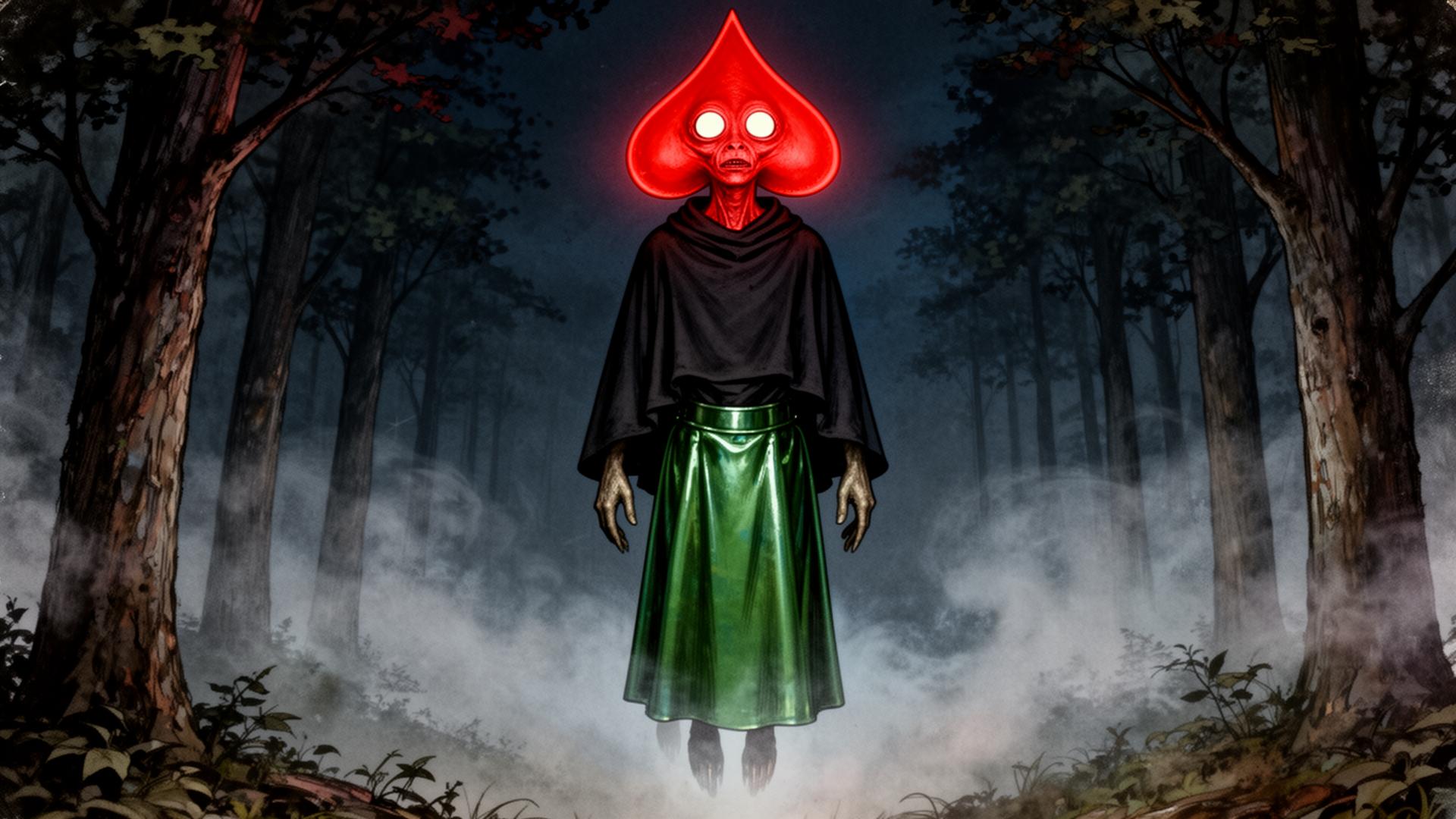
The Flatwoods Monster
66 miOn the evening of September 12, 1952, a group of boys, a mother named Kathleen May, and a 17-year-old National Guardsman walked up a hill outside Flatwoods to look at something that had come down. Braxton County has since built a free museum and a set of giant monster chairs on what they said they saw.