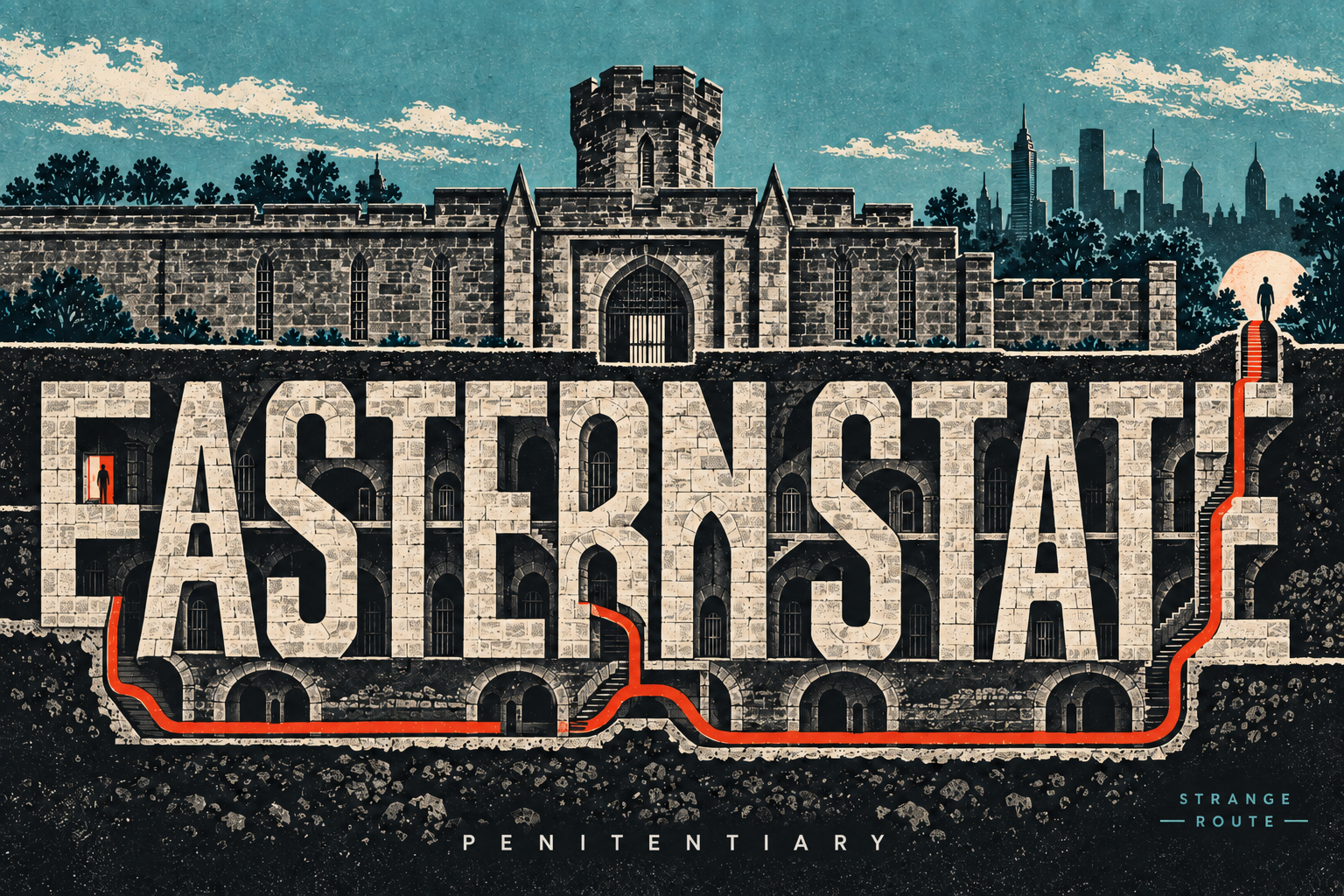
Eastern State Penitentiary
A former prison in Philadelphia that operated from 1829 to 1971 and pioneered the solitary-confinement-based "Pennsylvania System" of incarceration, now a museum widely promoted as one of the most haunted sites in the United States.
Field Guide Entry
Eastern State Penitentiary opened in 1829 built around a radical idea: total isolation, individual cells, and enforced silence would reform prisoners through reflection rather than punish them through contact with other criminals. When Charles Dickens visited in 1842, he recorded that "a black hood is drawn" over the head and face of every prisoner who arrived. The Pennsylvania System, as it became known, drew visitors from Europe who came to judge it, and they did not agree. Gustave de Beaumont and Alexis de Tocqueville, reporting to the French government in 1833, found it "more charitable in its whole spirit" than the rival Auburn system of New York. Dickens called the solitary confinement "immeasurably worse than any torture of the body."
Al Capone spent part of a one-year sentence here in 1929 and 1930. A newspaper account from August 1929 described his cell with a rug, oil paintings, and a cabinet radio, and that account built the legend of the luxury cell. The museum now says the truth is "somewhere in the middle": Capone shared the cell with a cellmate, and one document says he bought the radio from the cell's previous occupant. On April 3, 1945, twelve prisoners, including bank robber Willie Sutton, escaped through a tunnel dug from Cell 68 that ran 97 feet out under Fairmount Avenue. Sutton was caught within minutes, two blocks away, and every escapee was recaptured. Reports of unexplained sounds, shadows, and apparitions concentrate in the cell blocks and the old hospital wing. Eastern State itself makes no such claim. "We at Eastern State do not claim that the prison is haunted," a guide told NPR. "We run a haunted attraction."
The building's real history of enforced isolation, documented psychological breakdowns among inmates, and Dickens's contemporary account of the toll it took give its reputation a foundation that needs no ghost. Decades spent as a crumbling, unsecured ruin between its 1971 closure and its reopening as a museum likely did the rest, giving ordinary settling and decay plenty of time to be reinterpreted as something else.
Visiting Information
Admission includes an audio tour narrated by Steve Buscemi and a 45-minute guide-led tour booked for a set time, and the museum suggests allowing about 2 hours. Most of the site is neither heated nor cooled, floors are uneven stone, and there is no food on site. Each fall the museum runs Halloween Nights, a separately ticketed haunted attraction that replaced Terror Behind the Walls in 2021.
Field Gallery
No approved field photos yet. You could be first.
Community Notes
No community notes yet.

Toynbee Tiles
1 miCryptic tiles reading 'TOYNBEE IDEA...RESURRECT DEAD ON PLANET JUPITER' have been embedded in city streets since the 1980s. Investigators believe they've identified the reclusive likely creator, but he's never confirmed it himself.
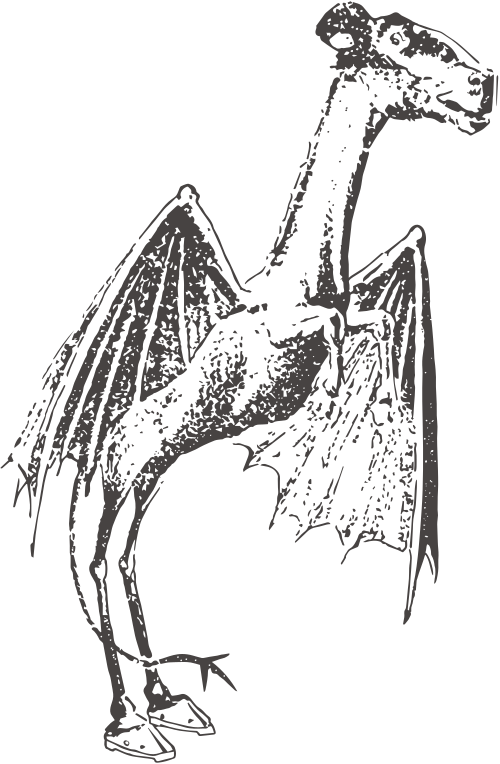
Jersey Devil
36 miA winged, hoofed creature reported out of the New Jersey Pine Barrens since colonial times, and the subject of roughly 1,000 sightings in a single week of January 1909. A Philadelphia press agent later admitted he had helped manufacture that week.

Ringing Rocks Park
41 miA county history published in 1876 described these boulders as giving "a peculiar metallic sound, the tone of each differing from the other" when struck. Only some of them ring: in 2020, acoustics engineers hit 534 and counted 167 that passed their test for ringing. Geologists have pointed to stress inside the rock, weathering of its minerals into clay, and how freely a boulder sits, without settling on one cause.

The Devil's Tree
55 miA lone, scarred oak in a Basking Ridge field that locals say punishes anyone who harms or mocks it. Axes have bounced off its trunk, cars supposedly crash after visits, and snow is said to refuse the ground beneath it.