
Toynbee Tiles
Cryptic tiles reading 'TOYNBEE IDEA...RESURRECT DEAD ON PLANET JUPITER' have been embedded in city streets since the 1980s. Investigators believe they've identified the reclusive likely creator, but he's never confirmed it himself.
Field Guide Entry
Beginning in the early 1980s, residents of Philadelphia began noticing small linoleum tiles cemented into asphalt streets and crosswalks, most bearing some version of the message: "TOYNBEE IDEA IN MOViE `2001 RESURRECT DEAD ON PLANET JUPiTER." In 1983, a man identifying himself as James Morasco called local talk radio stations and newspapers to explain a theory he said he'd developed after reading historian Arnold Toynbee: that the dead could be resurrected if humanity colonized Jupiter, citing a passing reference in Ray Bradbury's "The Martian Chronicles" as direct inspiration for the wording. During the 1980s and into the early 1990s, tiles attributed to the same creator turned up well beyond Philadelphia, with confirmed originals documented in New York City, Washington D.C., Baltimore, Pittsburgh, Boston, and Chicago, plus a handful of South American capitals, before new sightings outside the Philadelphia area became rare after the early 2000s.
Documentary filmmaker and tile researcher Justin Duerr spent years tracking the tiles' distribution and construction method. Each one is built in layers and bonded with a tar-like adhesive, then likely dropped into traffic and pressed down by passing car tires, since installing one would otherwise require stopping in the street. Duerr's 2011 documentary "Resurrect Dead" identified a reclusive Philadelphia man, Severino "Sevy" Verna, as the most likely creator, tying him to the same shortwave radio broadcasts and home address linked to the original "Morasco" phone calls.
No one, including Verna himself, who has never publicly confirmed or denied authorship, has definitively closed the case. A separate man named James Joseph Morasco did exist in Philadelphia, but his widow told a local TV station he had no interest in Jupiter and didn't recognize the tiles, suggesting "Morasco" may have been an alias borrowed from a phone book rather than the real culprit. New tiles matching the original technique have rarely appeared since the early 2000s. Did the original creator stop, die, or move on?
Visiting Information
Most confirmed original tiles from the 1980s and 1990s have been paved over or worn away, including the long-documented example once at 4th and South Street, so survival of any specific tile isn't guaranteed. Center City's Chestnut Street corridor between 12th and 16th Streets has historically had the highest concentration. Confirmed originals also once existed in New York City near 2nd Street and 2nd Avenue and in Washington, D.C. near the 13th to 15th Street corridor northwest of the White House, though most outside Philadelphia have since disappeared.
Field Gallery
No approved field photos yet. You could be first.
Community Notes
No community notes yet.
Nearby Strange Places

Eastern State Penitentiary
1 miA former prison in Philadelphia that operated from 1829 to 1971 and pioneered the solitary-confinement-based "Pennsylvania System" of incarceration, now a museum widely promoted as one of the most haunted sites in the United States.
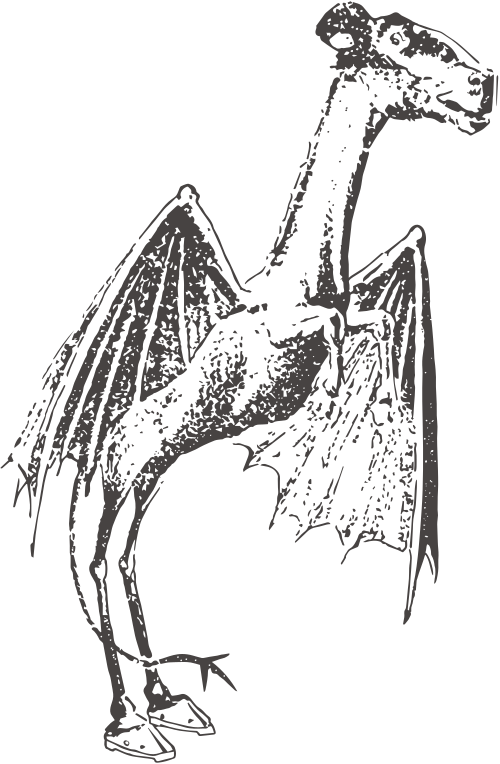
Jersey Devil
34 miA winged, hoofed creature reported out of the New Jersey Pine Barrens since colonial times, and the subject of roughly 1,000 sightings in a single week of January 1909. A Philadelphia press agent later admitted he had helped manufacture that week.

Ringing Rocks Park
42 miA county history published in 1876 described these boulders as giving "a peculiar metallic sound, the tone of each differing from the other" when struck. Only some of them ring: in 2020, acoustics engineers hit 534 and counted 167 that passed their test for ringing. Geologists have pointed to stress inside the rock, weathering of its minerals into clay, and how freely a boulder sits, without settling on one cause.

Lucy the Elephant
55 miA six story wooden elephant built in 1881 to sell New Jersey real estate is now the oldest surviving roadside attraction in America.