Jim Thompson House and the Disappearance of Jim Thompson
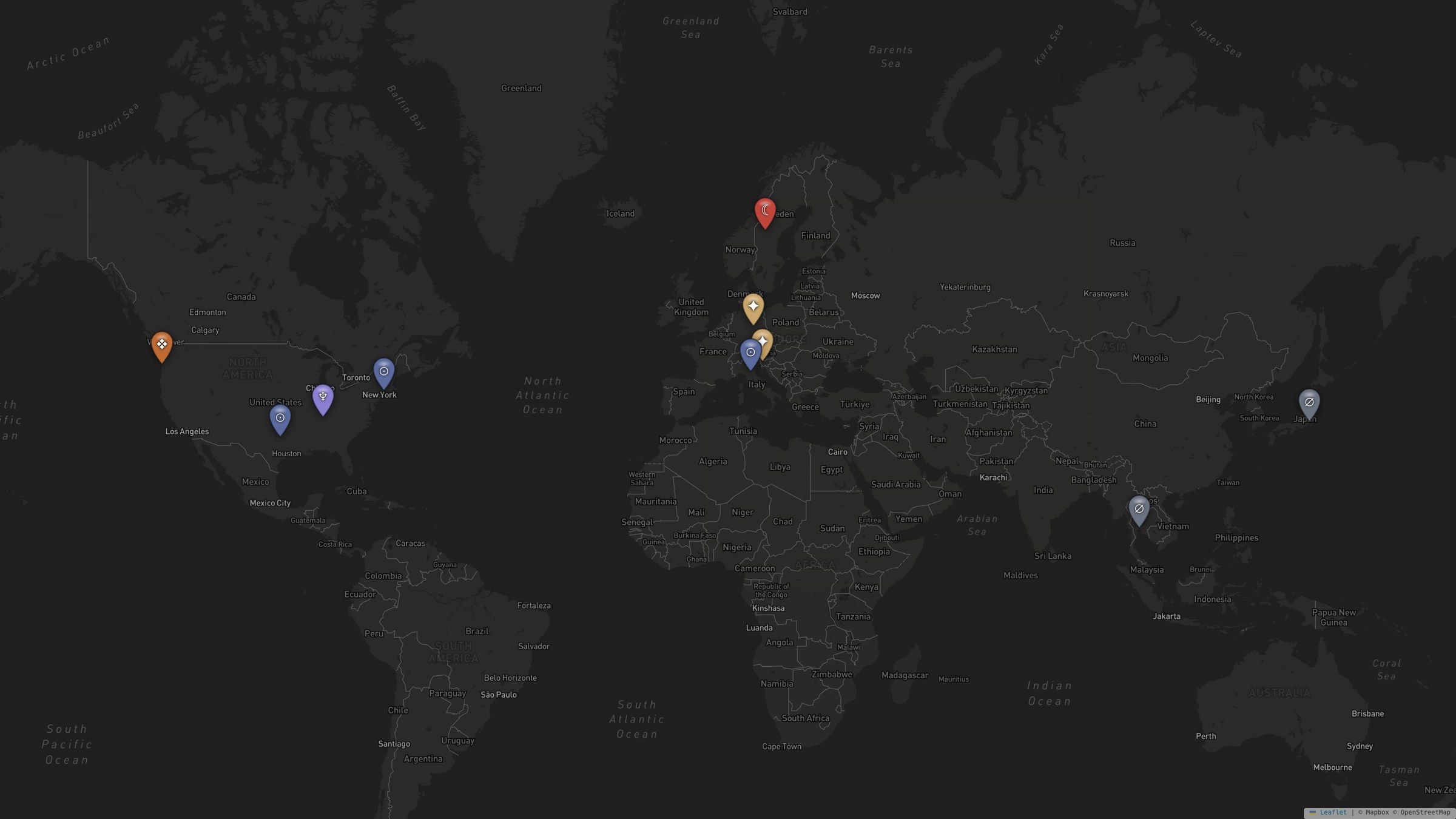
On March 26, 1967, Jim Thompson, the American who helped revive the Thai silk trade, left a bungalow in Malaysia's Cameron Highlands for an afternoon walk and was never found. A Thai court declared him dead in 1974. A 2017 documentary says the Communist Party of Malaya killed him, on accounts that came secondhand. The teak house he assembled in Bangkok is now a museum.
Field Guide Entry
The house
Thompson found the plot in July 1957, across the canal from Bahn Krua, a silk-weaving community. In the first quarter of 1958 he acquired six old teak houses from different sources, among them three from Pak Hai in the Ayutthaya region and the oldest, a weaver's house of around 1800 from Bahn Krua itself. The museum says little has changed in the house since 1967.
March 26, 1967
Thompson was 61 and had lived in Thailand since 1946. Time's 2016 retrospective says he joined the Office of Strategic Services in World War II, was sent to Thailand as the war ended, and stayed in Bangkok after his discharge. In March 1967, he was a guest of Dr. T. G. Ling of Singapore and Ling's wife at a bungalow called Moonlight in the Cameron Highlands, in Malaysia's Pahang state.
Most sources date the disappearance to Sunday, March 26, 1967, which was Easter. The James H. W. Thompson Foundation's own biography gives March 27. After lunch he left the bungalow at about 1:30pm for a walk. Time said he left while the Lings were resting, without telling anyone. Time also reported that the Lings called the police when he had not returned by dark, and that a cook said she had seen him standing on a nearby plateau for about 30 minutes before he vanished from view. The Penn Museum's magazine notes that he left without his cigarettes or his gallstone pills: "No one could explain, though, why he left the cottage without taking his cigarettes or his pills for gallstone pain."
The search
Time counted about 300 soldiers and police with tracker dogs and helicopters, plus 30 Orang Asli trackers, and said rewards offered in local newspapers drew no response. The Seattle Times put the official search at 10 days. No clues were found.
Explanations
Kidnapping has no ransom note behind it, murder has no body, and neither a secret mission tied to the Vietnam War nor elimination by business rivals has any evidence. Press coverage added suicide, a staged disappearance, a tiger, and capture by the Orang Asli. In 1985, Orang Asli settlers found remains without a skull in a grave at Brinchang, and nothing has confirmed them as his.
About 5 months after he vanished, Thompson's sister Katherine Wood was found beaten to death at her home in West Chester, Pennsylvania. The killing was never solved.
The 2017 documentary
The documentary Who Killed Jim Thompson, produced by Barry Broman, says the Communist Party of Malaya executed him. Free Malaysia Today reported its two sources on December 10, 2017. A Singaporean surveyor relayed a deathbed account from his late uncle, Teo Pok Hwa, a former senior party cadre, saying Thompson had asked to meet the party leader Chin Peng. The son of Willis Bird Sr., an OSS colleague of Thompson, said his late father believed the party killed Thompson at the request of the Communist Party of China, to stop him meeting Pridi Banomyong, the former Thai prime minister then in exile in China. The report offered no documents or physical evidence and no response from the party, the Malaysian or Thai authorities, or Thompson's family.
After 1967
A Thai court declared Thompson legally dead in 1974. His estate went to his nephew, Henry B. Thompson III, who donated the house and its antiques to the James H. W. Thompson Foundation, established in 1975, in keeping with his uncle's wish that the collection stay in Thailand.
Visiting Information
The museum's visitor page lists daily hours of 10am to 5pm, with the last guided tour at 5pm. No reservation is required, and walk-in tours run through the day when online slots are full. Admission is charged, with reduced rates for ages 10 to 21 and for visitors with disabilities, and children under 10 enter free. Current prices are on the museum's visitor page.
Visitors take off their shoes before entering the main house.
The nearest BTS Skytrain stop is National Stadium, exit 1.
Field Gallery
No approved field photos yet. You could be first.
Community Notes
No community notes yet.