What Was Actually Found in Poland’s ‘Vampire’ Grave?
At Pień, archaeologists found a young woman’s remains with a sickle and a padlock. We had the opportunity to speak directly with the lead archaeologist to better understand the findings and what they tell us about the burial.
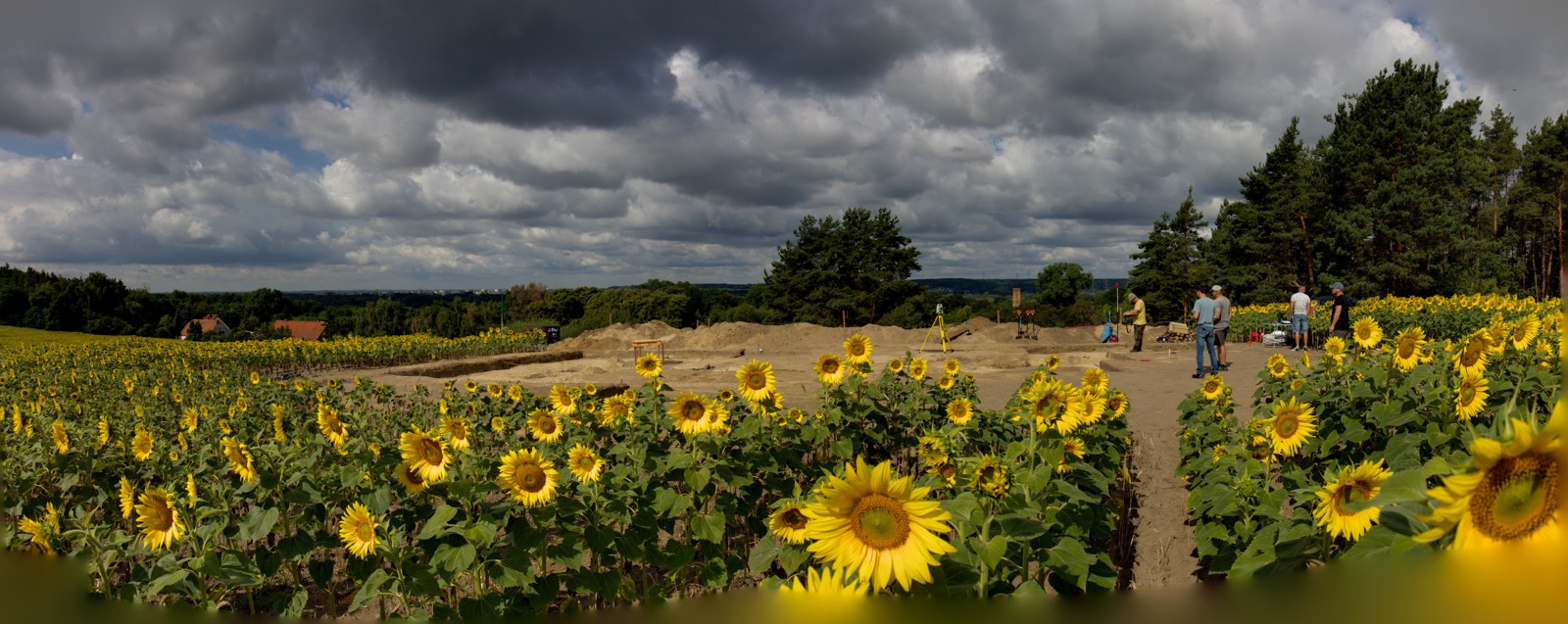
In 2022, an archaeological team led by Prof. Dariusz Poliński uncovered a young woman’s grave at Pień in north-central Poland. An iron sickle lay across her neck, its cutting edge facing her throat. A triangular padlock hung from the big toe of her left foot. The burial featured in the 2024 PBS documentary Field of Vampires and is often described as a “vampire” grave.
The team’s 2026 study brings together the excavation records and laboratory work. The woman was about 17 to 19 when she died, and the researchers place her burial in the seventeenth century. They interpret the sickle and padlock as measures intended to protect the living from the dead, while leaving the community’s exact beliefs unresolved. The grave may also have been reopened. We asked Poliński how his team reached those conclusions and what their research can tell us about her life.
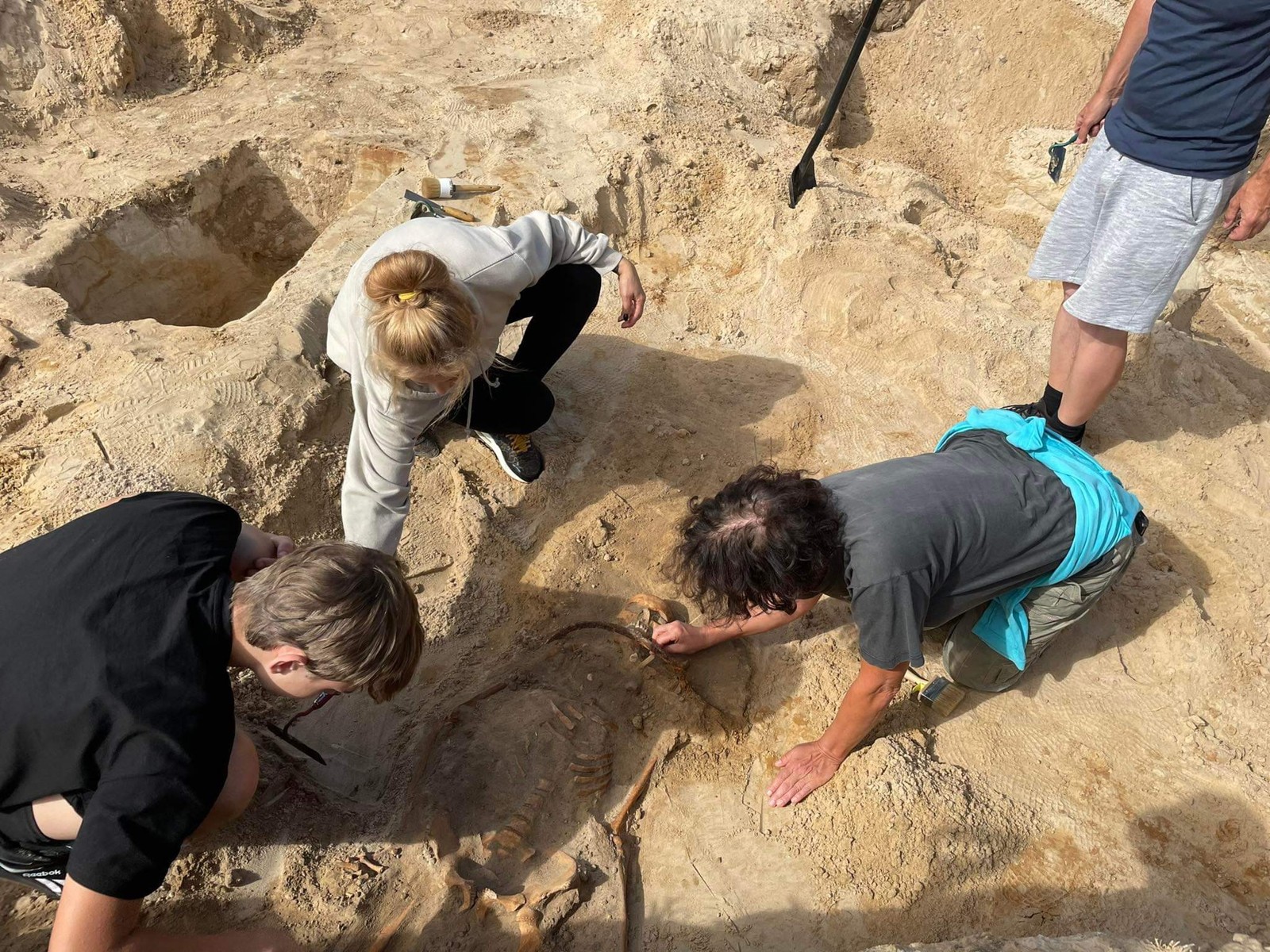
Photo: Łukasz Czyżewski
Following the excavation
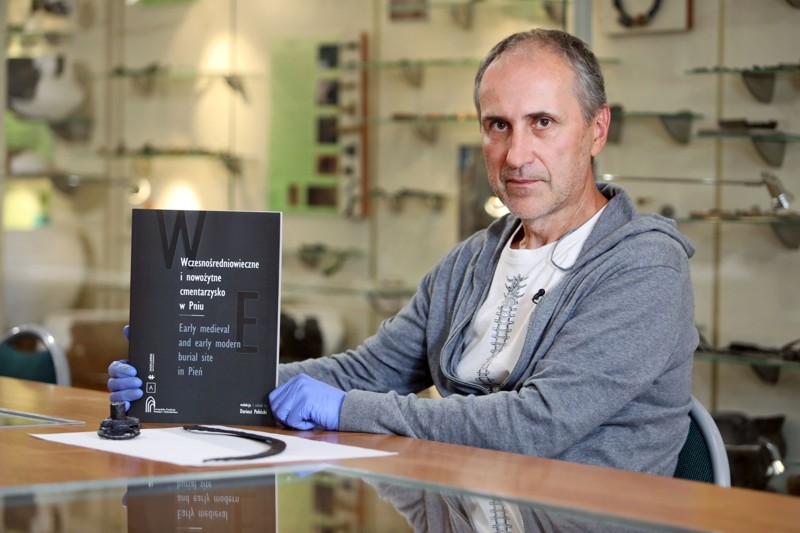
Professor Dariusz Poliński is an archaeologist at Nicolaus Copernicus University in Toruń and leads the Pień excavations. He is the lead author of the 2026 study of grave 75. His team’s account connects the excavation itself with work on the remains, textiles, and chemical traces.
What the team found

Photo: Łukasz Czyżewski
Strange Route · 1. Which evidence most strongly supports interpreting grave 75 as an attempt to protect the living from the dead?
Prof. Dariusz Poliński
The strongest evidence supporting the interpretation of protecting the living from the dead in this case is the sickle, particularly its positioning with the blade pointed directly at the neck.
The possible reopening
The grave may preserve more than one event. Poliński and his co-authors suggest that the padlock was there at the original burial and the sickle was added when someone reopened the grave. That sequence remains uncertain.
Strange Route · 2. The university’s 2022 report described no visible later disturbance, while your paper suggests the grave may have been reopened. What led your team to that interpretation?
Prof. Dariusz Poliński
The 2022 university report was a brief summary prepared immediately after the excavation work. A detailed analysis of the field documentation and all visible evidence led us to this interpretation.
What the copper can tell us
The green discoloration was visible when the skull was first cleaned. Laboratory tests identified concentrated copper traces in the palate, with staining extending toward the base of the skull and upper neck. The authors propose that someone introduced a copper-containing object or substance into the mouth or throat region. No such object was recovered, so the material’s identity remains uncertain.
Strange Route · 3. What further evidence, if any, could help identify the source of the copper traces?
Prof. Dariusz Poliński
We are working on this continuously, speaking with experts, and searching for answers as to what this could have been.
What we can learn about her life
Poliński’s team is also investigating the woman’s life. Silk decoration survived around her head, suggesting elevated social status without establishing a particular rank. Her bones and teeth provide other evidence about how she lived. Each finding adds to the picture, but her name and cause of death remain unknown.
Strange Route · 4. Which finding gives us the clearest glimpse of her life before death?
Prof. Dariusz Poliński
In my opinion, the decorative element of the coif provides important evidence of the buried woman’s high social status. It suggests that she was most likely a noblewoman rather than a peasant and represents a surviving remnant of what was probably a rich and costly outfit.
The rest of the cemetery
The team’s study reports 101 post-medieval graves at Pień, at least a dozen with unusual burial practices. Comparing them gives grave 75 a wider context. The same archaeological area also contains an earlier cemetery from the late tenth and early eleventh centuries. Those graves belong to a separate period and need to be kept distinct.
Editorial note: “Zosia” is the name used by the research team. Her historical identity remains unknown.
Strange Route · 5. What does the cemetery as a whole tell you that grave 75 alone cannot?
Prof. Dariusz Poliński
At the 17th-century cemetery in Pień, we uncovered burials of various types, including a large number of atypical graves. A comprehensive and multidisciplinary investigation of this site may provide us with a broader picture of the people buried there, including a key answer to the question of whether this was a regular cemetery used by the local community or a special burial ground for individuals who were rejected or marginalized.
Research on Grave 75, although it is naturally part of the cemetery under study, is focused primarily on the individual buried there, Zosia. Because of the exceptional nature of Grave 75, even within this cemetery, the results of our investigations cannot automatically be extrapolated to the entire necropolis. Nevertheless, they constitute an extremely important component of the broader research into the post-medieval cemetery at Pień.
How the story is told
The term “vampire grave” brings folklore into the story before a reader reaches the research.
Strange Route · 6. What is the most important point you would like to clarify about the way this burial is described?
Prof. Dariusz Poliński
Who was this young woman? Did she have a family? Were people afraid of her during her lifetime, or only after her death? How did she come to be buried in Pień, and what caused her death at such a young age? These are precisely the questions we are still trying to answer.
Archaeological, anthropological, genetic, and historical research has allowed us to learn a great deal about the burial itself, yet Zosia’s full story remains unknown. We still do not know who she was during her lifetime, whether she had a family, or whether she was feared by those around her while she was alive or only after her death. We also do not know how she came to Pień or what caused her untimely death at such a young age.
Questions for the next stage
Strange Route
The research gives us a clearer account of the burial, while leaving a central question unresolved. What led people to take these precautions? That question remains open as the work at Pień continues.
Sources
The team’s 2026 study: excavation observations and laboratory findings.
The university’s 2022 report: the initial account discussed in question two.
Published study in the university repository: the research paper.
Photo credits
Overhead photograph of Grave 75, taken August 30, 2022, by Łukasz Czyżewski, from Poliński, D. et al. (2026), Journal of Archaeological Science: Reports, 74, 105967. © 2026 The Authors. Published by Elsevier Ltd. Licensed CC BY 4.0. The image was resized.
The excavation and landscape photographs are by Łukasz Czyżewski. Economic rights: TSE “Ewolucja”/Projekt Pień.
Featured Places
Comments
0 on the record
- No comments yet. Be the first witness.