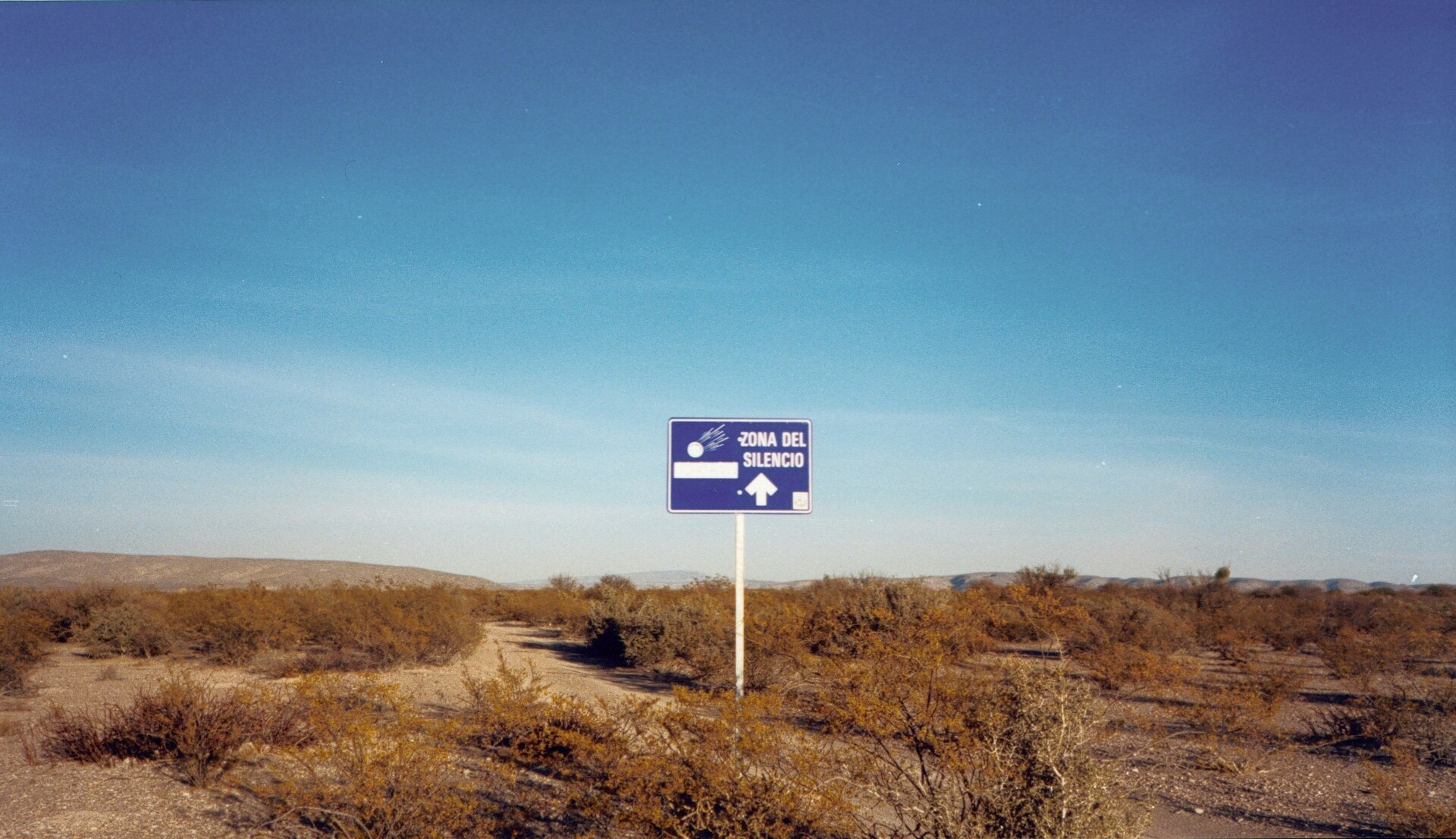
Zone of Silence
On July 11, 1970, an Athena missile launched from Green River, Utah, went off course and came down deep inside Mexico, in the Mapimí desert of Durango. Its reentry vehicle carried two containers of cobalt-57. American crews built a road to reach it and hauled tons of soil back out.
Field Guide Entry
The launch
Athena missile 122 left Green River, Utah, in the middle of the night on July 11, 1970, aimed at an impact on the White Sands Missile Range. It reentered abnormally, ran south instead, and crossed the border. Range personnel watched it go.
It came down in the Bolsón de Mapimí in Durango, far south of the border.
The recovery
The reentry vehicle carried two small containers of cobalt-57. That turned a lost missile into a radiological cleanup in a foreign country. Crews built a road through the desert to reach the site, dug out the contaminated ground, and shipped tons of soil north.
Months of American vehicles and personnel working an empty stretch of Mexican desert, on a job nobody explained locally, is the event underneath everything that came afterward.
What grew on top of it
The claims arrived later: that radios fall silent, that compasses spin, that meteorites fall here more than elsewhere, that lights appear. Writers eventually connected the area to other so-called anomalous zones by latitude, which requires ignoring most of the latitude.
The name Zona del Silencio postdates the missile.
What is there
The Mapimí Biosphere Reserve covers this desert, with a research station and long-running work on the Bolsón tortoise. The skies are among the darkest reachable by road in northern Mexico.
Radios work.
Visiting Information
The area lies inside the Mapimí Biosphere Reserve, and the practical way in is with a local guide or through the reserve's research station rather than independently.
Nothing marks the missile story. There is no monument and no visitor center for it. What draws people is desert, dark skies, and the reserve's tortoise research.
Tracks are sand and will strand a vehicle without clearance, fuel stops are far apart, and phone coverage runs from patchy to absent. Carrying more water than a day appears to need is normal practice here.
Driving off the established tracks damages a desert surface that takes decades to recover, which is the thing the reserve exists to protect.
Field Gallery
No approved field photos yet. You could be first.
Community Notes
No community notes yet.
Explore More Mysteries

Kelly-Hopkinsville Encounter
On the night of August 21, 1955, the Sutton and Taylor families near Kelly said small, silver-eyed creatures kept appearing at their farmhouse windows and on the roof, and they fired on them for roughly 4 hours. Responding officers found bullet holes and shell casings but no creatures or footprints.

Loring Air Force Base Weapons Storage Area
On the evening of October 27, 1975, by one account, a security policeman guarding the nuclear weapons storage area at Loring Air Force Base watched an aircraft with a red light and a white strobe cross the northern perimeter at about 300 feet. It came back the next night. A memo from the National Military Command Center recorded an unidentified helicopter "landing briefly in proximity to a weapons storage area," and the Air Force never identified it.

Alleged UFO Skip Site
The Bureau of Land Management built a parking lot and a mile of walking to a patch of public land near Corona it officially calls the place where some people believe a craft came down in July 1947. The ranch where the debris was found is a separate property, private, and closed.

Brown Mountain Lights
In 1922, the U.S. Geological Survey sent George R. Mansfield to Brown Mountain with a surveying telescope. Over about two weeks he took bearings on every light that appeared and plotted them against rail lines, roads, and homesteads. He attributed 47 percent to automobile headlights and 33 percent to locomotives.