What makes something a lost treasure?
Lost treasures come in all shapes and sizes. Along the Thames, mudlarking means searching the river’s exposed foreshore for objects left behind by earlier generations.
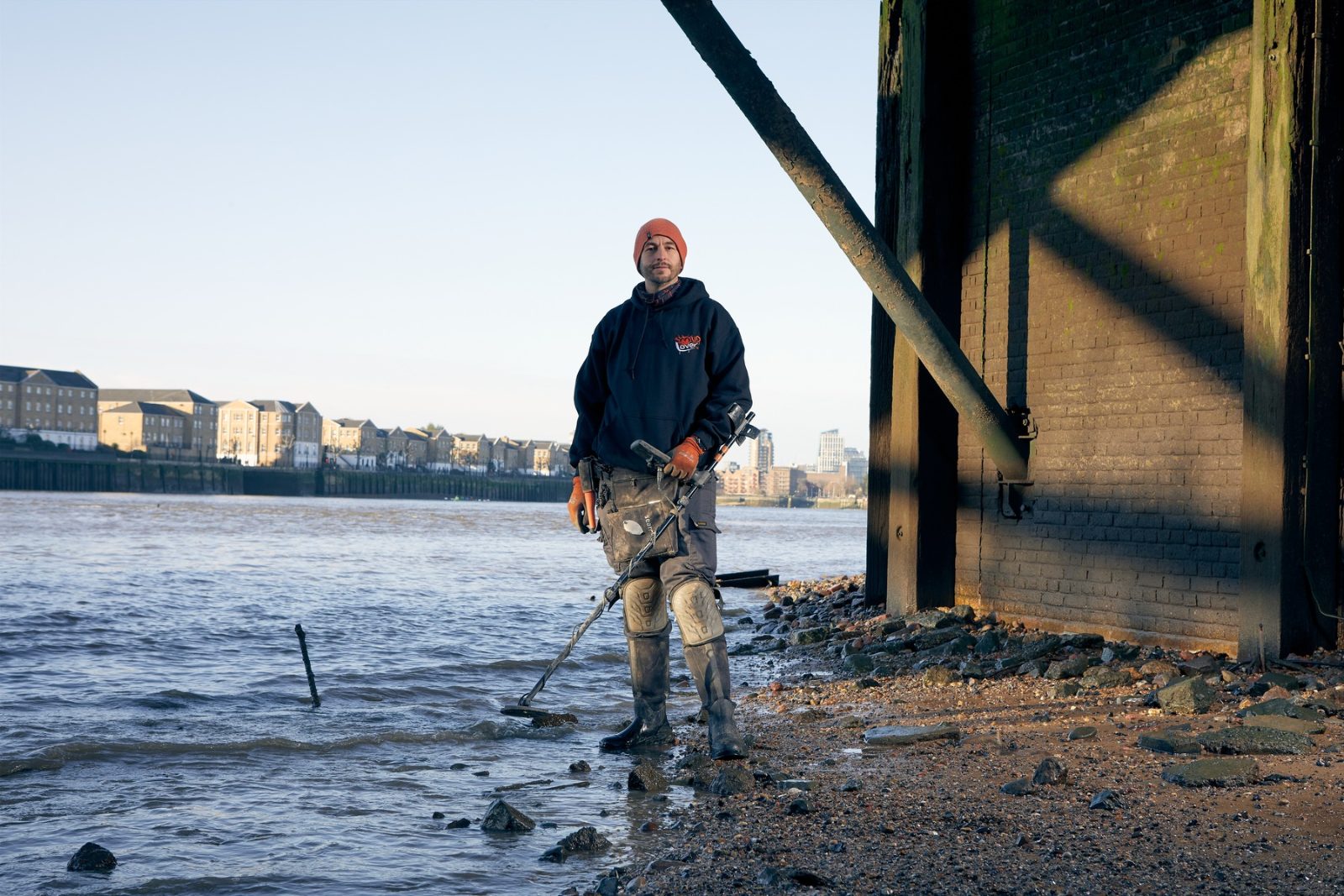
Strange Route had the opportunity to connect with Simon Bourne, creator of Si Finds, to dig deeper into this way of exploring the past. In our written interview, he explains the range of things he finds, how he works out what they are and what happens when an object leads back to a person.
On his YouTube channel, Bourne shares searches along the Thames and more adventurous outings by hovercraft. His finds range from everyday household objects to a dog tag that he returned to Nathan Posener’s family. We asked him about the discoveries, the permissions behind a search and how they have changed his view of London.
Searching the foreshore
Strange Route · Your channel takes viewers from searching the Thames at low tide to “extreme mudlarking” trips by hovercraft. For someone new to it, what is mudlarking, and what changes on those more adventurous outings?
Simon Bourne
Mudlarking is searching for anything old or interesting on the foreshores of any river when the tide recedes. Some rivers are muddier, more dangerous and less accessible than others, on those ones you need specialist gear to get you out there, in our case, we use Hovercrafts
The range of a river’s finds
Strange Route · You’ve found everything from everyday household objects to Roman pottery and a mammoth tooth. Which two very different finds would you choose to show someone the range of what can turn up?
Simon Bourne
Those items are a very good example of the range of things mudlarks find. Another juxtaposition find would be clay pipes that can date anywhere from the early 1900s to the late 1500s, compared to modern Vapes that were tossed recently. I wonder if treasure hunters in a hundred years will get the same buzz we do finding a clay pipe, as they might do finding a 21st Century Vape.
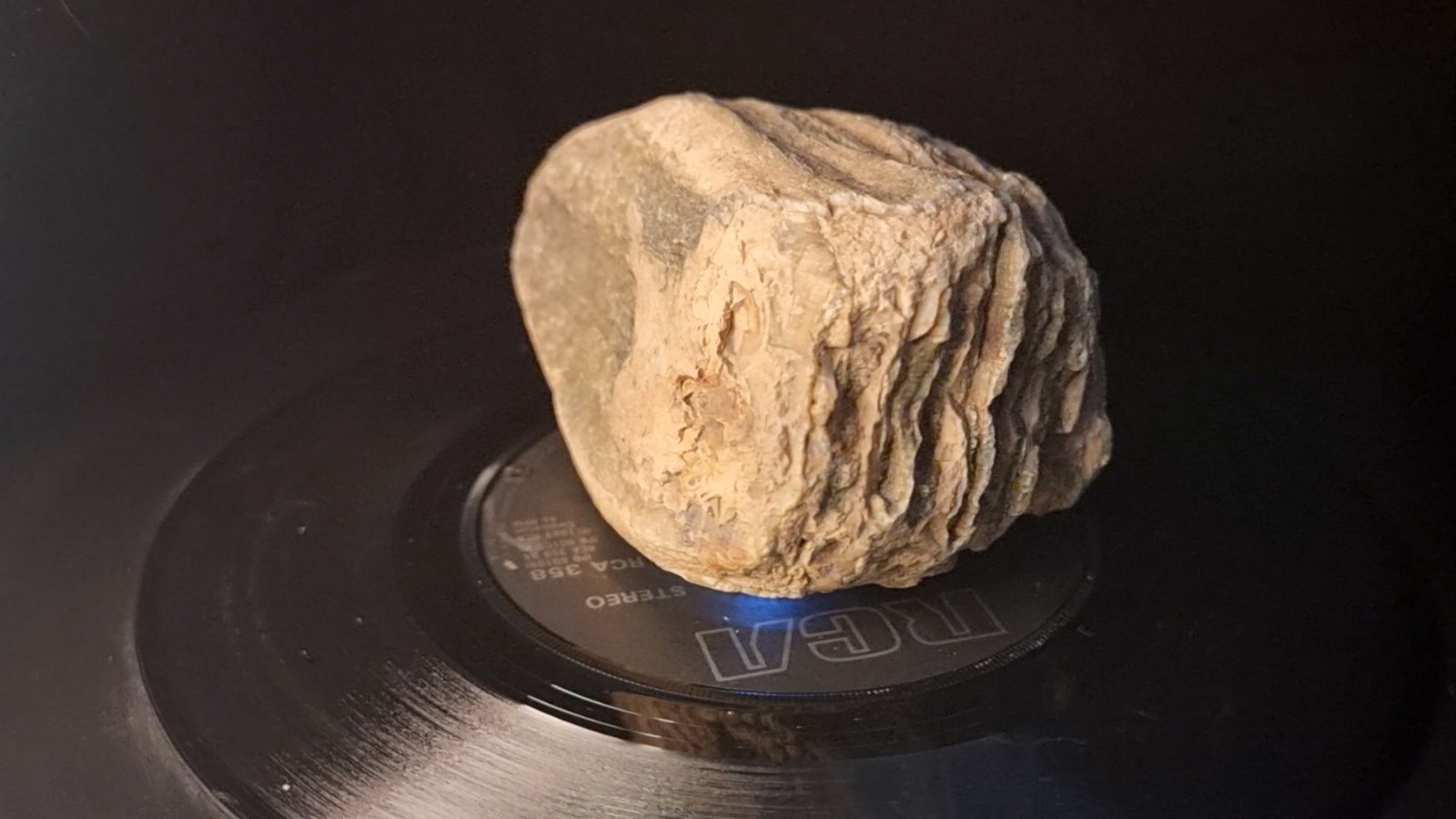
Photo: A mammoth tooth from Bourne’s supplied photographs, illustrating the range of material discussed in the interview. Image supplied by Simon Bourne / Si Finds.
Reading the smallest detail
A name can change the direction of a find. In Bourne’s account, an object that first looked familiar became the starting point for a search for descendants.
Strange Route · Sometimes the smallest detail seems to catch your eye. Could you walk us through a find that turned out to be something different from what you first thought, and how you worked out what it was?
Simon Bourne
I first thought I'd found an old large 10p coin, which isn't an amazing find, but on closer inspection it turned out to be a 1917 silver French Franc, smoothed and engraved on one side with the name N Posener, his military number, and the word Jew, all below the Royal Flying Corp logo. It turned out to be a local man's dog tag. I wrote to the local paper, and requested any descendants of Nathan Posener to come forward. A few weeks later they did, his grandson John. I ended up giving the dog tag back to John to add to his family history. He was over the moon!
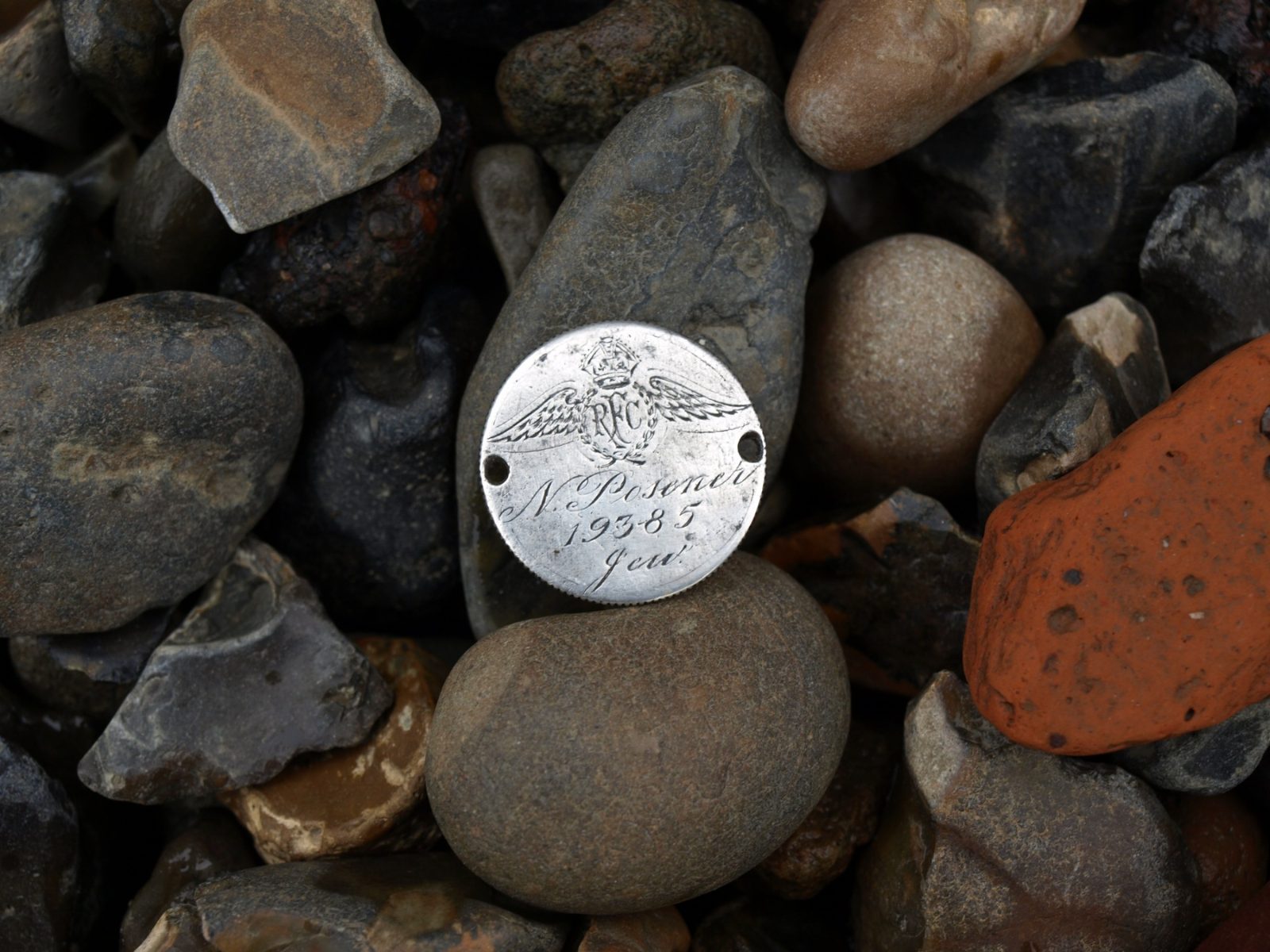 | 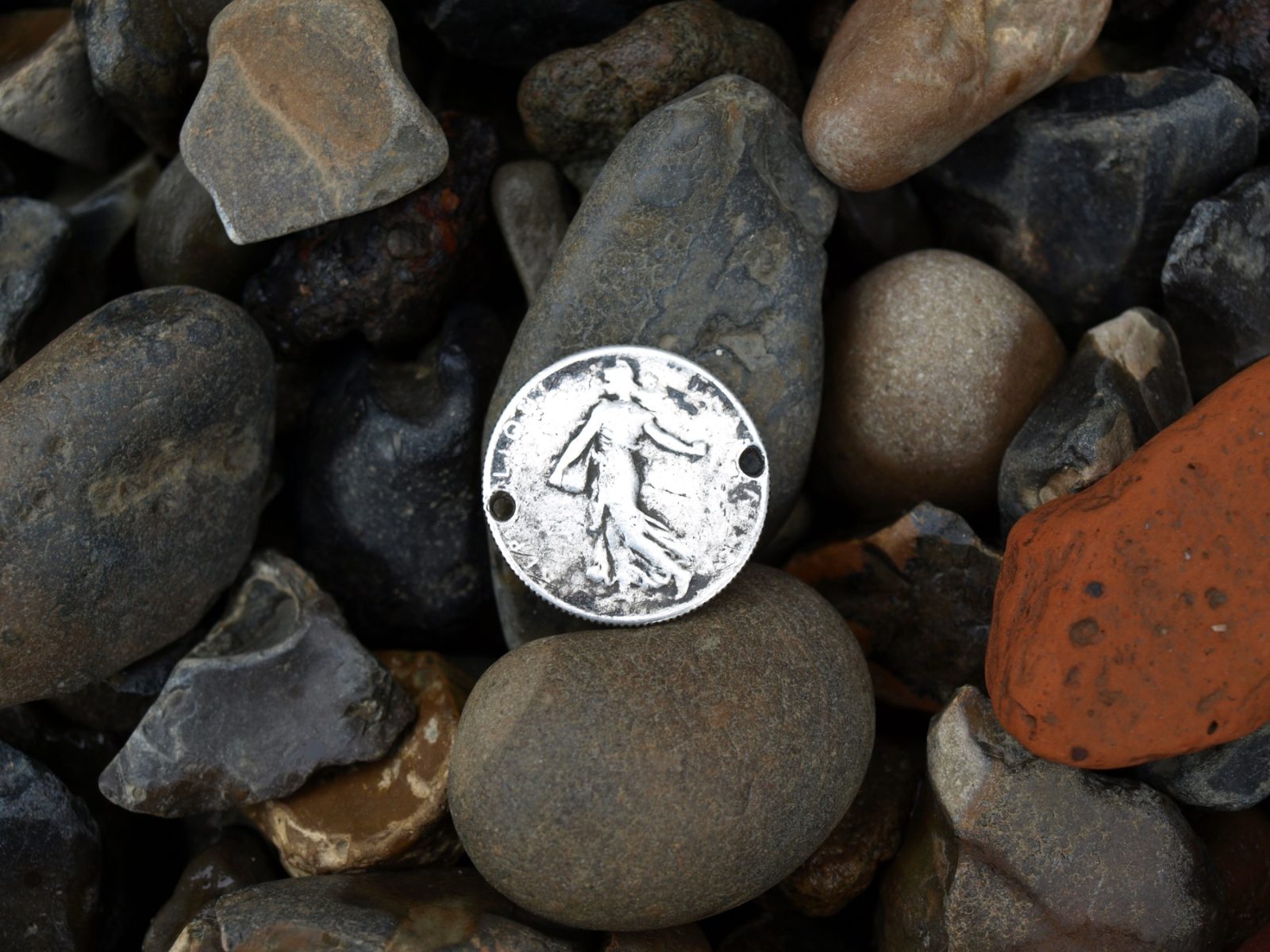 |
Photo: The engraved face of Nathan Posener’s dog tag (left) and the reverse of the coin (right), as described by Bourne. Image supplied by Simon Bourne / Si Finds.
Where permission matters
Bourne distinguishes his own Thames permits from the landowner permissions he seeks elsewhere. Anyone searching the tidal Thames foreshore between Teddington and the Thames Barrier needs a current, relevant Port of London Authority foreshore permit. His answer describes his own arrangements, including special permissions.
Current Port of London Authority foreshore permit requirements
Strange Route · Before trying somewhere new, how do you work out where you’re allowed to search and what permissions you need? Has an access restriction ever changed your plans or approach?
Simon Bourne
Most of the time I search the Thames foreshore, for which I have a Diggers permit. This is different from a standard permit, as part of the Society of Thames Mudlarks, these special Digger Permits allow us to search on the North Side by scraping and detecting, and digging to deeper depths along most of the river. When it comes to searching other areas, permission is sought by finding the landowner. I did this recently, I found a new river, then found the owner and they agreed to me searching it. What I wasn't prepared for was he also rents the fields out to horse owners, and they take a route through the river to cross fields and I nearly ended up under hoof when they stampeded through the river I was in!
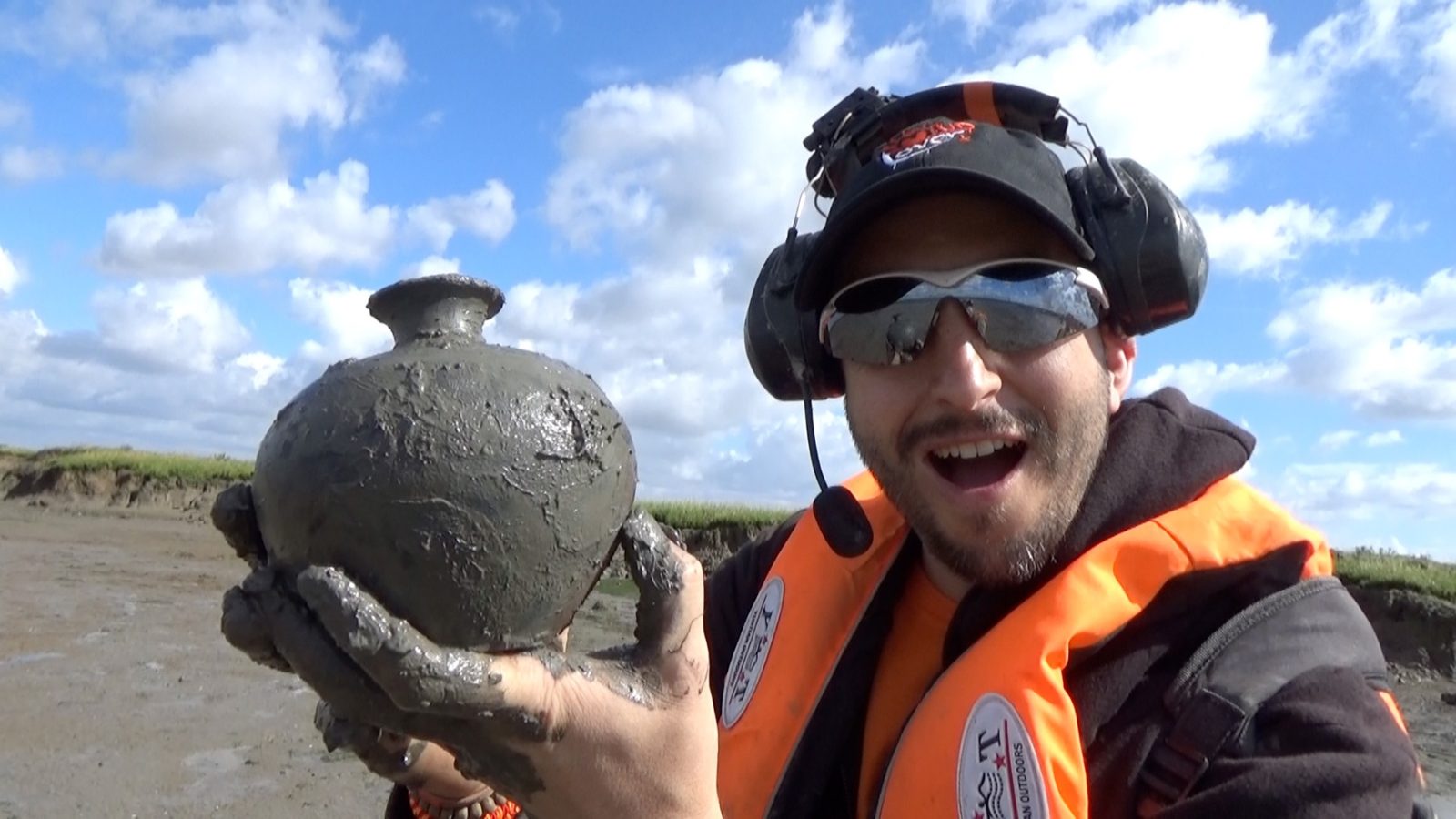
Photo: Simon Bourne holding a pottery find during an outing. Image supplied by Simon Bourne / Si Finds.
Putting a face to a name
Strange Route · Returning Nathan Posener’s dog tag connected you with the family behind the name. Beyond learning that he was a tailor, what did hearing from his family add to your understanding of the tag and Nathan himself?
Simon Bourne
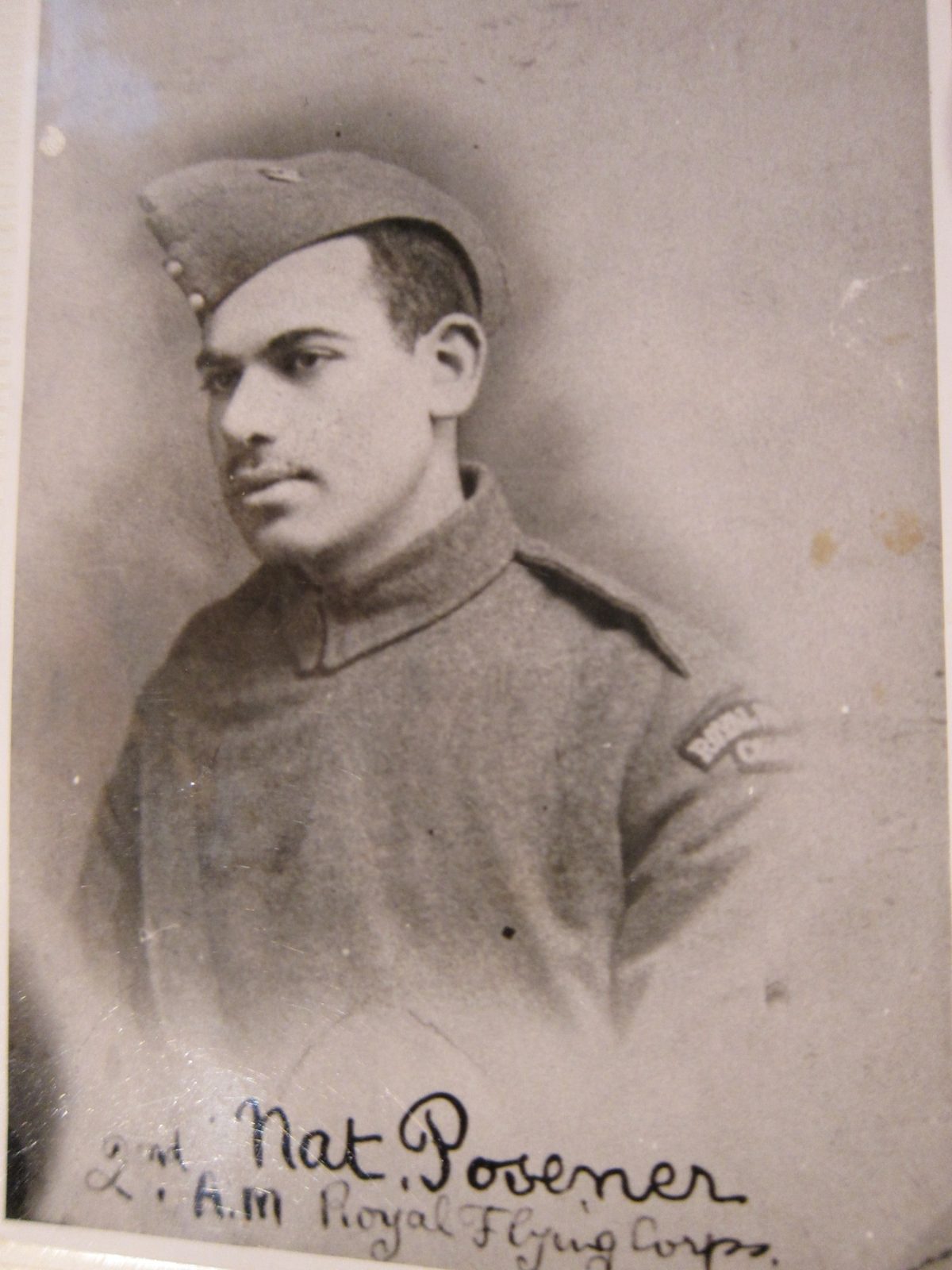
They showed me a picture of him, so I got to see what the owner of this lost dog tag looked like, an experience we never normally receive when finding lost items. Now and again we can find the owner, such as with stolen jewels (returned because their ID was in there) and a bag belonging to the Skipper of a Thames Rocket boat (again because he wrote his name inside his bag) but this is a rarity. With Nathan Posener, we also learned that he was an Air Man, so probably actually got to fly as well, or at least train. At the time, his daughter was still alive, albeit in her nineties, and she said of hearing about the tag that it 'made her year' hearing that her Dad's dog tag was found after all these years, she never knew it even existed.
Seeing London through its lost objects
The family story is one way an object can change someone’s view of the past. Across a much wider collection of finds, Bourne also sees traces of a river whose working life was very different from the quiet foreshore he often encounters today.
Strange Route · After years of finding things people lost, used or threw away, what have those objects changed about how you see London and the people who lived there?
Simon Bourne
That the Thames a was much much busier place than it is today. When you step down onto the foreshore it's a quiet and relaxing place, but it was such a hive of industry where people spent large volumes of their life, eating, drinking, gambling, working EVERYTHING! I also learned that London's culturally mixed population isn't anything new, we find old coins and arefacts from all over the world, from Chinese cash coins where the old China town used to be, to Spanish pirate cobbs, and Japanese Netsuke (Carved stone objects that tighten the cords on a Kimono) to American made WW2 anti-aircraft shells.
Following the story beyond the find
Bourne’s account makes the find the beginning of the story. The pleasure of recognizing a clay pipe sits alongside the rarer experience of finding a person behind a name. Nathan Posener’s tag could be read through its markings; hearing from his family added a face and a response that the coin could not supply on its own. That distinction matters to Strange Route’s interest in places and their histories. A foreshore can hold traces of many lives, and a careful account makes room for both what an object reveals and what remains beyond our knowledge.
Have you encountered an object that changed how you understood a familiar place? We would welcome the story of what you learned and what you still hope to find out.
Watch a video with Simon
TOP 10 Mudlarking Finds in 10 YEARS - GUNS, GOLD and Good stuff!
Simon looks back at ten years of his own finds, including Nathan Posener’s dog tag and a mammoth tooth.
Sources and credits
Written interview with Simon Bourne in October 2026.
Foreshore portrait: Tom Harrison. Other photographs and archival portrait supplied by Simon Bourne / Si Finds.
Video and thumbnail: Si-finds Thames Mudlark / YouTube.
Comments
0 on the record
- No comments yet. Be the first witness.