Why People Turn to Santa Muerte for Healing and Protection
Strange Route interviewed author and religious studies scholar Dr. R. Andrew Chesnut about the people behind the devotion, the significance of the public altar in Mexico City’s Tepito neighborhood, and what respectful visitors should understand.
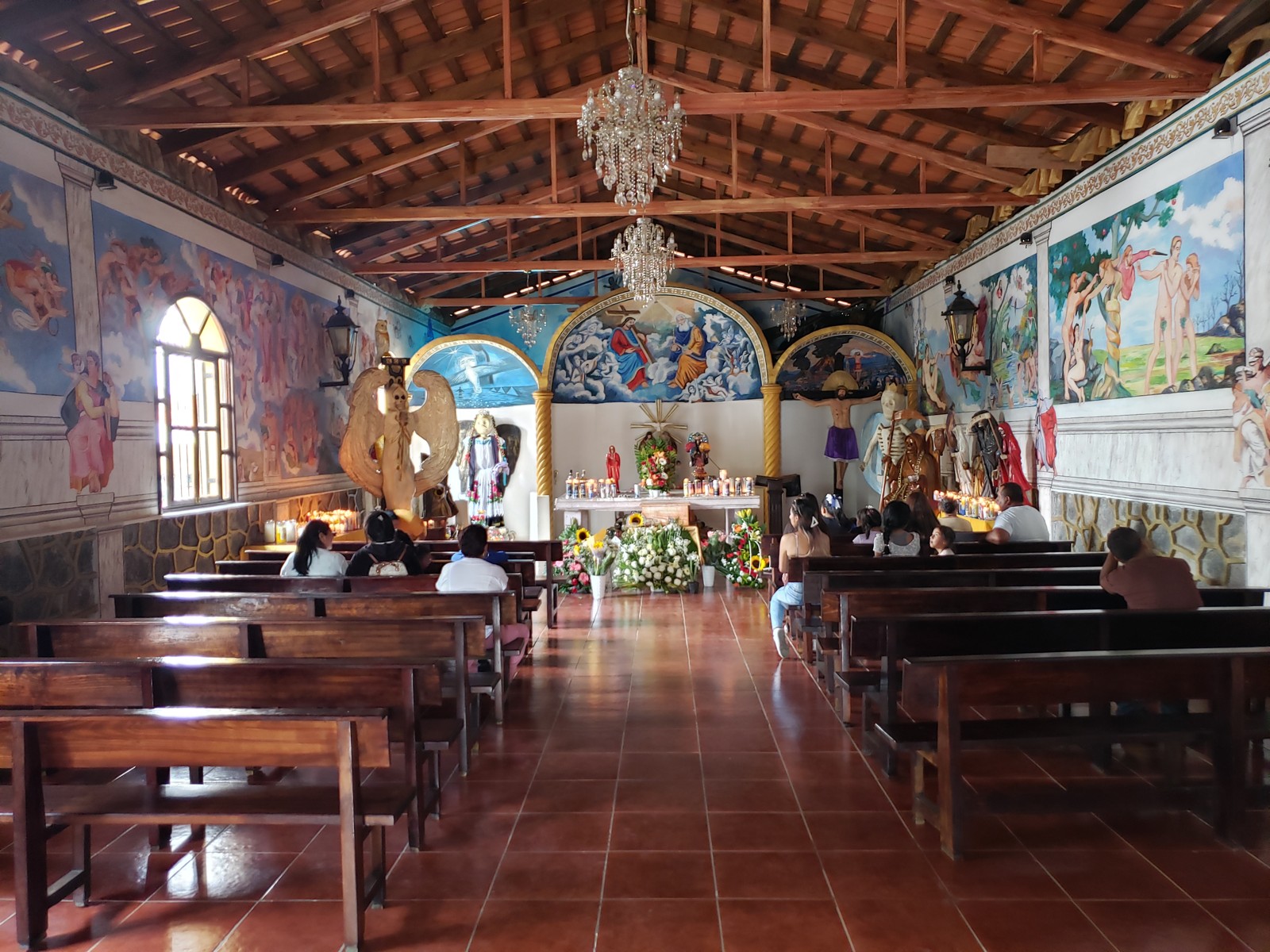
People turn to Santa Muerte with concerns that are deeply familiar: a relative’s illness, an uncertain income, the need to feel safe. The Mexican folk saint personifies death, yet many devotees petition her for healing and protection in their daily lives.
That relationship has been central to Dr. R. Andrew Chesnut’s research for nearly two decades. We asked him what his fieldwork reveals about the devotion and the people who practice it.
Dr. R. Andrew Chesnut
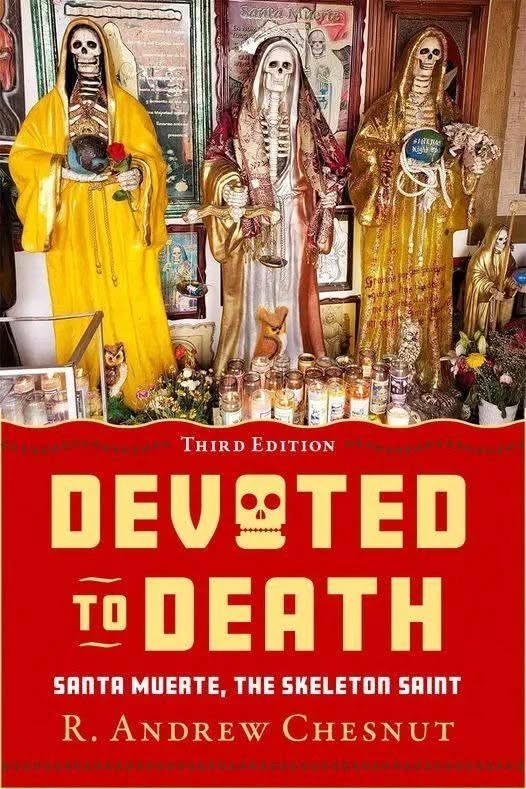
Dr. R. Andrew Chesnut is the Bishop Walter F. Sullivan Chair in Catholic Studies and Professor of Religious Studies at Virginia Commonwealth University. He is the author of Devoted to Death: Santa Muerte, the Skeleton Saint, now in its third edition.
Why people turn to Santa Muerte
Strange Route · From your conversations with devotees, how do people’s reasons for turning to Santa Muerte differ? Is there an example you can share that helps explain that variety?
Dr. R. Andrew Chesnut
One of the most striking findings from my fieldwork is the extraordinary diversity of reasons people turn to Santa Muerte, ranging from love and financial security to protection, justice, and healing. Although media accounts frequently associate her with drug traffickers, most devotees I've encountered are hard-working people seeking supernatural assistance with the challenges of everyday life.
For example, a mother praying for her child's recovery and a street vendor asking for protection against robbery may petition the same saint of death, but their needs and circumstances are quite different.
What unites them is the belief that Santa Muerte is an exceptionally powerful and nonjudgmental supernatural protector who responds to petitions that Catholic saints might seemingly ignore.
Why healing became central to his research
Strange Route · You’ve described being surprised by the importance of healing in Santa Muerte devotion. What has most changed or deepened your understanding since then, as reflected in the third edition of Devoted to Death?
Dr. R. Andrew Chesnut
When I began researching Santa Muerte nearly two decades ago, I was struck by the paradox of devotees petitioning the personification of death for healing and protection from mortality itself. Subsequent research has only reinforced my understanding that health and healing are central to her appeal, particularly among people who lack reliable access to medical care or face serious illness within their families.
The third edition of Devoted to Death reflects a broader appreciation of Santa Muerte's transformation into a transnational religious figure whose devotees increasingly include people far removed from the Mexican working-class communities where her public devotion first flourished.
Perhaps the most important lesson is that Santa Muerte cannot be understood primarily through the sensational lens of drug trafficking and violence; her meteoric growth is equally rooted in the universal human desires for health, love, protection, and a supernatural ally who never discriminates against those seeking her assistance.
The Tepito altar and a turning point in public devotion
Santa Muerte devotion predates the altar at Alfarería 12. In a lecture reported by Mexico’s National Autonomous University, Dr. Chesnut traced early historical references to Inquisition reports from 1793 and 1797 involving the veneration of skeletal figures.
The surviving record then has a long gap. By the 1940s, anthropologists were documenting Santa Muerte devotion in Oaxaca and Guerrero, including women’s petitions concerning love and unfaithful partners. These accounts offer glimpses of earlier devotion, rather than a complete record of how it developed.
To understand the significance of Enriqueta ‘Doña Queta’ Romero’s shrine in Tepito, we asked Dr. Chesnut what changed when she brought her image into public view in 2001.
Strange Route · What changed when Enriqueta Romero made her Santa Muerte image publicly visible at Alfarería 12 in 2001, and how does that moment fit into the devotion’s longer history?
Dr. R. Andrew Chesnut
When Doña Queta placed her life-size Santa Muerte statue outside her home in Mexico City's working-class Tepito neighborhood on Halloween 2001, she unintentionally launched the transformation of what had largely been a private devotion into a highly visible public religious movement. Her sidewalk shrine became a focal point for devotees who previously had no public spaces to gather and express their faith in the Skeleton Saint.
However, Santa Muerte devotion did not begin in 2001, as documentary evidence traces her veneration back to colonial Mexico, with important developments during the nineteenth and twentieth centuries.
What changed was not the birth of the devotion but its public visibility, collective organization, and eventual expansion across Mexico and beyond.

Photo: Karen Melo / Wikimedia Commons. Photographed October 31, 2018. CC BY-SA 4.0
What common portrayals leave out
Strange Route · What do media coverage and popular culture most often get wrong about Santa Muerte, and what would more accurate coverage pay attention to?
Dr. R. Andrew Chesnut
The most persistent misconception is that Santa Muerte is merely a narco-saint worshipped by drug traffickers and violent criminals. While her devotion certainly has a presence within Mexico's criminal underworld, reducing millions of followers to that association obscures the much larger world of ordinary devotees who seek assistance with health, employment, family relationships, and personal safety.
Another frequent mistake is equating Santa Muerte with Satanism, despite the fact that most Mexican devotees understand her within a broadly Catholic religious framework and do not consider her demonic. More accurate reporting would pay attention to devotees' own explanations of their faith, the historical development of the movement, and the remarkable diversity of people who petition the Bone Mother.
Understanding the offerings
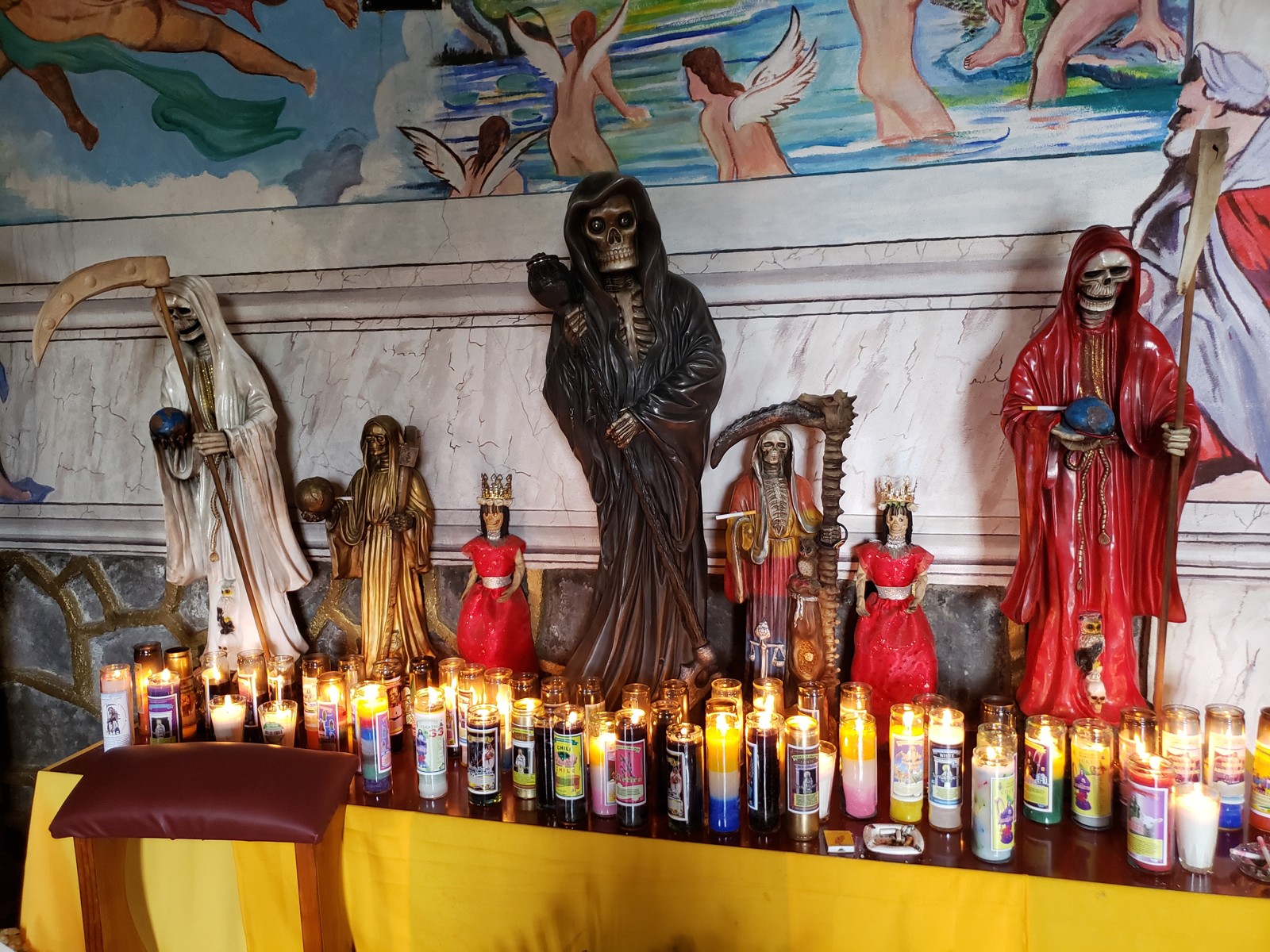
Photo: Dr. R. Andrew Chesnut. Casa de la Santa Muerte in Michoacán, not the Tepito altar
Strange Route · Could you explain one or two offerings a visitor might see at the altar? What should we be careful about interpreting without hearing from the person who left them?
Dr. R. Andrew Chesnut
Visitors to Doña Queta's shrine will encounter an array of offerings, including candles, flowers, cigarettes, alcoholic beverages, and sweets, reflecting the deeply reciprocal relationship between Santa Muerte and her devotees.
Red votive candles, for example, are commonly associated with love and passion, while white candles typically symbolize purification, protection, and gratitude. A bottle of tequila or a cigarette might represent a personal gift to the Lady of the Shadows, an expression of thanksgiving, or the fulfillment of a promise made in exchange for supernatural assistance.
However, we should avoid assuming that an offering has one fixed meaning, since devotees frequently develop highly personalized relationships with Santa Muerte that can only be understood by listening to their explanations.
Approaching the altar respectfully
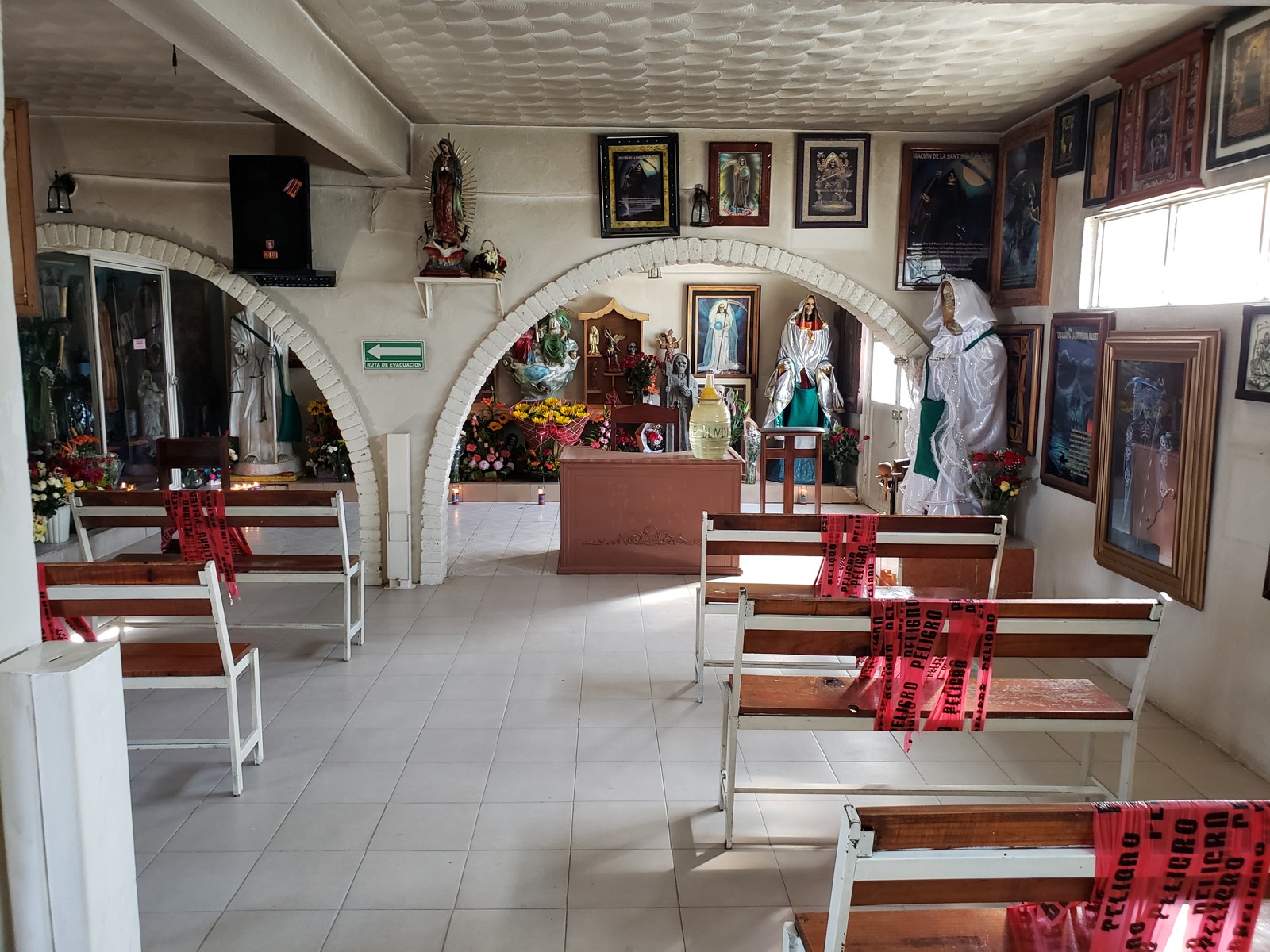
Photo: Dr. R. Andrew Chesnut. Santuario de la Santa Muerte in Querétaro, December 2020
Strange Route · Based on your fieldwork, how should visitors approach the altar respectfully? What should they ask its caretakers and individual devotees before taking photographs or sharing images online?
Dr. R. Andrew Chesnut
The first thing visitors should understand is that Doña Queta's shrine is not simply a tourist attraction but a sacred space where people bring their deepest fears, hopes, and personal struggles. I would encourage visitors to approach the altar with the same respect they would show at a Catholic church, Buddhist temple, or other place of worship, remembering that what may appear exotic to outsiders is profoundly meaningful to devotees.
Before photographing the shrine or its worshippers, visitors should seek permission from the caretakers and from individuals who might appear in their images, especially when snapping private prayers, tattoos, or offerings.
Permission to take a photo should not automatically be interpreted as permission to publish it online, particularly given the discrimination and stigmatization that Santa Muerte devotees sometimes experience.
Listening to devotees
Strange Route
Throughout our conversation, Dr. Chesnut returned to the everyday concerns that bring people to Santa Muerte: health, family, work, and protection. At Tepito’s altar, those concerns give personal meaning to the prayers and offerings visitors encounter. Understanding that meaning requires listening to devotees themselves. For Strange Route, paying attention to the people for whom a location is part of everyday life is one of the most important parts of documenting it and we hope to continue to explore that through our Q&A interviews.
We would also welcome the perspective of Santa Muerte devotees. What does your devotion mean to you, and what do you wish others understood about it? Share only what you feel comfortable sharing. Comment below, or feel free to send us a message through our contact form.
Read more about the Santa Muerte altar at Alfarería 12 in our archive.
Book and credits
Sources
VCU faculty profile: Chesnut’s title and affiliation.
UNAM’s account of Chesnut’s lecture: the historical expansion in the article.
Oxford University Press, third edition: book information.
Chesnut’s Michoacán photo essay: locations of the additional photographs.
Featured Places
Comments
0 on the record
- No comments yet. Be the first witness.